Jason Aramburu 2010 Echoing Green Fellow

Last updated June 29, 2010

Ron Larson, June, 2010

Jason Aramburo has just received a nice honor (and some funds) from the group "Echoing Green". See a 1.5 minute video

Jason's regular "re:char" newsletter is available at http://www.re-char.com/

There is some more information there - including this Bloomberg site with another competition Biochar advocates can vote on http://images.businessweek.com/ss/10/06/0608_socialentrepreneurs/20.htm

Re-char (Jason as founder) is one of the few Biochar groups emphasizing char combined with a biofuel. Still interested in developing countries mostly. Good to see this variation and that hardware sales are underway.

Jason - congratulations on all of the above.

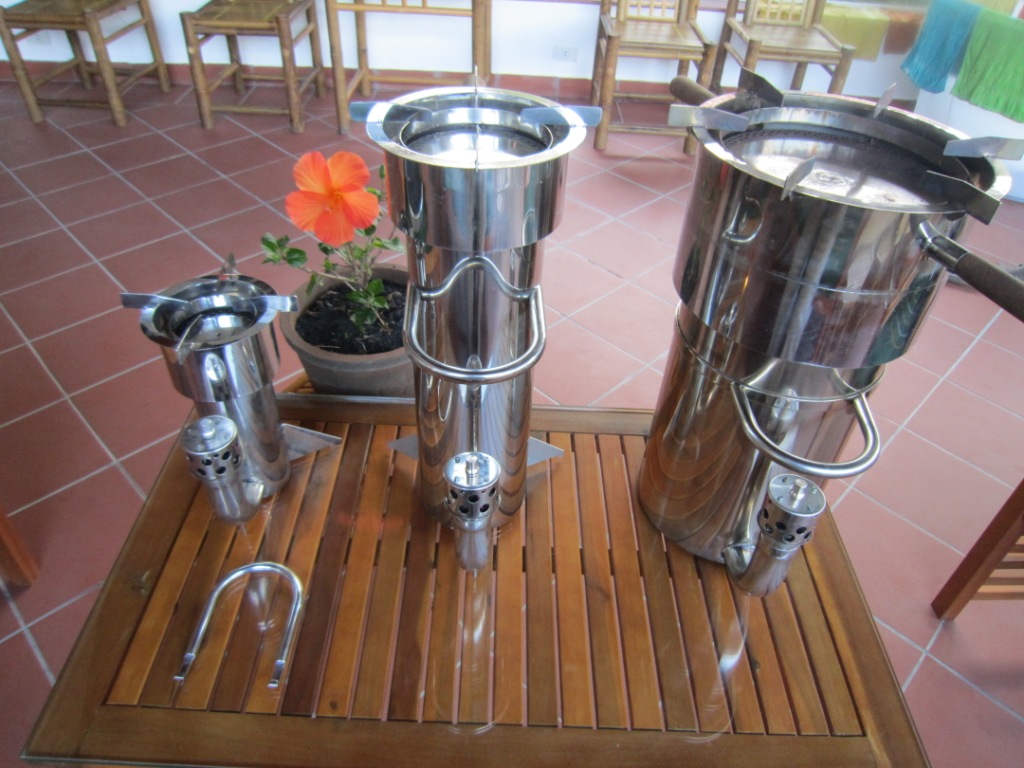
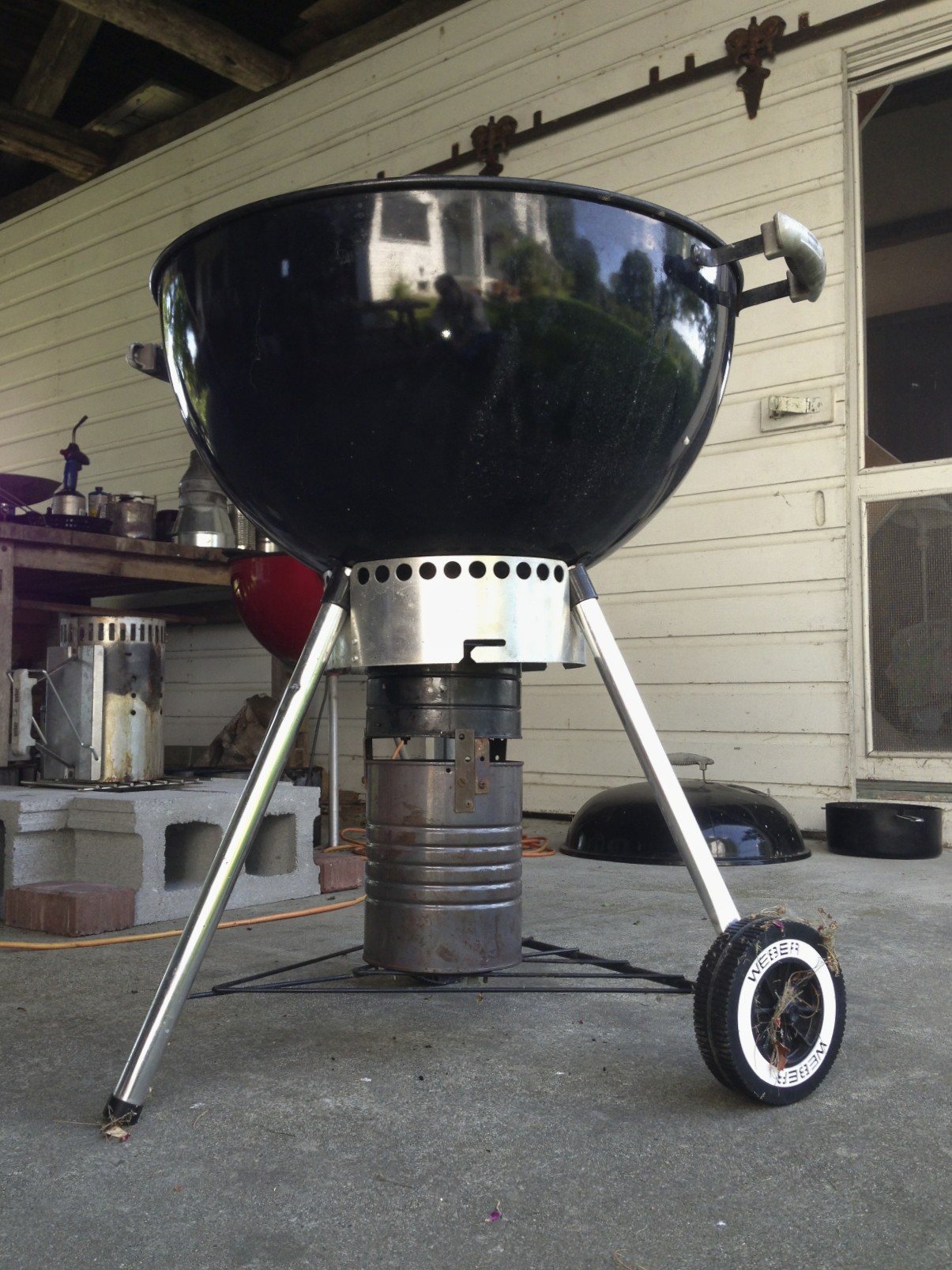
5-gallon rocket stove burner

Last updated June 29, 2010
in

David Yarrow and Jim Welch, June 2010

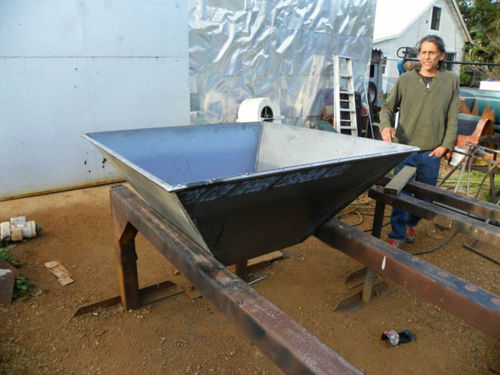
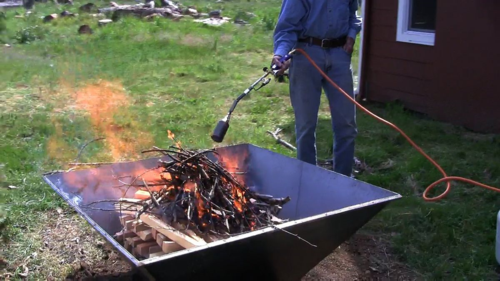
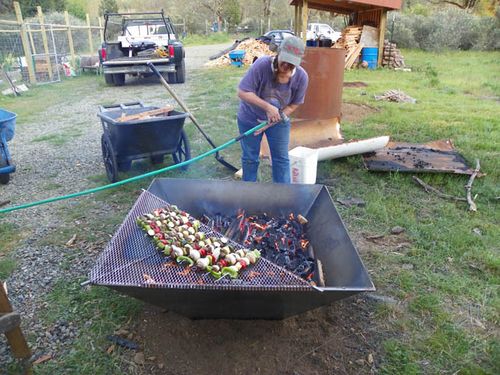
Last summer, Jim Welch built a rocket stove on a concrete pad in my backyard to make biochar in a 55/30-gallon nested kiln & retort. this first test of a hybrid biochar burner was a great success, despite a few troublesome difficulties with the process, beginning with having large, still-moist logs of red pine timber for feedstock.

This spring, Jim scaled his experiment down to a 5-gallon retort nested in an 18-gallon kiln, with a shoebox-size rocket stove to fire up the retort. last saturday jim brought his modest unit to my biochar workshop at Saratoga apple, and gave us an inspiring demonstration of how simple, effective and easy pyrolysis can be:

Read more at http://www.carbon-negative.us/JWelch/

China Biochar Network (CBN)

Last updated June 29, 2010

From the IBI June Newsletter

China Biochar Network (CBN)

The China Biochar Network (CBN) was officially inaugurated June 12, 2010. The CBN is comprised of more than 20 organizations within China, which are universities, institutes of China Academy of Science, and local agricultural research institutes. They come from Anhui, Beijing, Chongqing, Tianjin, Guangzhou, Hunan, Hubei, Inner Mongolia, Jilin, Shanxi, Shengyang, Sichuan, Xinjiang, Yunnan, and Zhejiang, covering most of the country. The China Agricultural University (CAU) will be the headquarters of CBN.

The CBN will carry out experiments on biochar's effect on soil processes. The experiments will focus on the ecological impact of biochar, yield and quality of vegetable and fruit under biochar application, and grain production with biochar. The CBN will also pay attention to the carbon balance in biochar production and application.

The CBN will be an organization to serve all CBN members on information exchange, project cooperation, method development, and training. The objective of CBN is to develop biochar technology in agriculture and environment protection in China. It will be a center of biochar research and related topics. For more information, please see:
http://www.biochar-international.org/chinanetwork

Biochar talk for coffee farmers

Last updated July 08, 2010

Ben Driscoe, June, 2010

I gave a 40-minute talk on biochar recently to the Kona Coffee Grower's Association (here on the island of Hawai'i).

10 minutes of it got uploaded: http://www.youtube.com/watch?v=42gr_1whjc8

It covers the basic carbon cycle, biochar's agricultural use, interaction with nutrients and microbes, reversing fossil fuel use, appropriate sources of renewable biomass.. my sources of information are, basically, this mailing list, and my own experiences making and using biochar.

I also gave the historial terra preta story, talked about various ways to make char, interaction with compost, how to charge with various nutrients including urine, and other stuff that didn't make it into the 10 minute clip.

-Ben
Also see Ben's super awesome Biochar Notes page: http://ahualoa.net/ag/notes_biochar.html

Proyecto Estufa Finca An Update from Seattle

Last updated June 10, 2010

Art Donnelly, SeaChar.Org June, 2010

It was not quite 9 months ago, when I sent out an email to a small group of collaborators, with a Subject line that asked the question: "How do we get biochar stoves to Central America?" Of course, like the punch line to the old vaudeville joke, the answer is "lots of hard work". I could not have imagined 9 months ago was how rewarding all that work would feel. I want to share that feeling with all of you.

I recently returned to Seattle from Costa Rica's famed coffee producing area the Santos Zone. This was my second trip since mid- January. I have been continuing my work as a technical consultant to a clean stove/biochar project. Proyecto Estufa Finca (Farm Stove) was initiated by organic coffee farmer Arturo Segura http://www.solcolibri.com/ and the members of the local citizens group APORTES.

The goal of the Estufa Finca/ Costa Rica project is to provide safe and affordable alternative cooking technology to one of the most vulnerable populations in Central America. Each year over 100, 000 migrant agricultural workers enter Costa Rica to harvest the coffee and cocoa we enjoy. This population of families most often live without access to clean water and sanitation. They typically cook on smoky and inefficient wood fires.

The effects of this daily exposure to high levels of carbon monoxide and soot fall most heavily on women and young children. Respiratory disease is a leading cause of sickness and death in this population. This situation mirrors that of millions of families in Central America. This toll is not only felt in terms of human health, but also in it's contribution to deforestation and climate change.

I am very pleased to announce that in cooperation with the recently formed local woman's group of APORTES (the Givers), SeaChar.Org is now helping to build and distribute the clean burning, biochar producing, Estufa Finca biomass stove for the Central America market. These elegant, efficient stoves, which are designed in Seattle and made in Costa Rica, are now available for $40 US. (plus shipping) We recently had the assistance of TLUD stove inventor Dr. Paul Anderson http://www.hedon.info/Micro-gasificationWhatItIsAndWhyItWorks and a $1500 tool and materials grant from a Bloomington-Normal Illinois, Rotary Club . This has allowed us to put together a temporary workshop, where three women can work and to stock supplies for 65 stoves. The initial goal of our joint Seattle/ Costa Rica project is to reach the estimated 1,500 seasonal agricultural workers homes, with a clean, safe efficient cook stove. A donation of $40 pays for a stove for a coffee pickers family.

The women's owned stove workshop is located in Santa Maria de Dota, Costa Rica. Working from patterns, guides and jigs, which we developed as a team, the women can produce completed stoves and stove "kits". Working with partners like Santos Tour http://www.santostour.net/ , the kits are being assembled and paid for by visiting student volunteers, during one-day "Stove- building" workshops. APORTES organizer and workshop leader Carolina Abarca, is getting stoves built and Estufa Finca global ambassadors. These are high quality appliances, assembled with simple hand tools and rivets. The completed stoves are tested and then donated to the Proyecto Estufa Finca, to be leased for home placement with migrant coffee picker families. The Estufa Finca is both fuel flexible and fuel efficient. These easy to use TLUD-style, stoves burn with 65% lower emissions of carbon monoxide and soot, than a traditional, open three-stone fire. They convert dry biomass waste into a clean gas flame and valuable charcoal. Interest and demand for both the stoves and workshops are growing. We are getting inquiries from around Costa Rica and around the world. The potential for widespread good and a vibrant woman's owned business seem imminent.

To realize this potential is going to take your critical early support. Your investment of time, money or expertise at this early phase will ensure our success. The Seattle based non-profit, Seattle Biochar Working Group, is providing carbon negative technology development, testing, training and fund raising assistance for Proyecto Estufa Finca. You can make a tax deductible donation using PayPal at http://www.seachar.org/ or contact art.donnelly@seachar.org for information on how to buy stoves and to learn how you can help us reinvent fire.

Pura Vida,

Art Donnelly
SeaChar.Org
Proyecto Estufa Finca
--
"it's time to get positive about negative thinking"

Black is Green - finalist in the 2010 Premier’s ClimateSmart Sustainability Awards

Last updated June 08, 2010

James Joyce, June 2010

Mackay-based company, Black is Green, was named a finalist in the Innovation in ClimateSmart

Technologies category of the Queensland ClimateSmart Sustainability Awards, at the awards ceremony on Friday night in Brisbane.

On the eve of World Environment Day, the recognition was for BiG’s efforts in developing a patented technology to convert plant and animal wastes into valuable biochar and energy.

Biochar is an agricultural grade of charcoal which provides a host of environmental benefits when applied to soils. These include reduced fertiliser run-off, improved water retention and sustained increases in soil carbon content. Biochar is increasingly recognized for its potential to reduce greenhouse gas emissions while simultaneously providing commercially attractive benefits to land users. Influential Australians such as Tim Flannery, Malcom Turnbull and Don Burke are some of the prominent supporters of biochar.

BiG’s BiGchar technology addresses the challenge to make biochar production economically viable, by making the systems mobile or relocatable, more productive and more efficient than the technologies currently used. BiG’s achievements in these key areas are attracting worldwide interest.
Black is Green co-director Dr. James Joyce commented: “We were pleasantly surprised to have been chosen as one of three finalists from a list of forty Queensland companies, many of whom are recognised leaders in the field of sustainable technologies.”

The Premier’s ClimateSmart Sustainability Awards were established to recognise the achievements of Queensland communities, businesses and industries in reducing carbon emissions, taking action to abate climate change, and improving business sustainability.

Further details on BiGchar technology and BiG’s current activities are available at its website http://www.bigchar.com.au , or by email on contact@bigchar.com.au .

Rockin Rocket Retort

Last updated May 26, 2010

Rob Lerner, May, 2010

From Rob's Biochar Blog: http://biocharlog.blogspot.com/
Also take a look at his Captioned Slideshow: http://picasaweb.google.com/bajarob/RockinRocketRetort#.

MAGH BIOCHAR RETORT - 1

Last updated May 25, 2010


Magh biochar retort

Magh Bichar retort - 1 is a simple low-cost biochar making retort. In this design a two hundred liter steel drum is used. The top and bottom portions of the drum were cut open. One of the lids is used for covering the open side. The biomass is dumped into the drum and lit at the top and more biomass is added while it is still lit to fill it up to the brim. In TLUD condition the flame continuous. After some time the intensity of the flames lessen. Now the lid is placed over the flames and using soil the lid is sealed, so that no smoke is seen leaking out. Now the smoke appears at the pipe, which is attached through a connecting pit at the bottom of the drum. Leave it for more than 12 hours. The biochar continues to form and also the retort cools down. This second situation is the downdraft condition.

Note: Precaution should be taken to keep oneself as far as possible from the flames. The efficient production of the biochar also depends on the producers experience. For more details see http://maghbiocharretort.blogspot.com/

Magh Biochar Retort is demonstrated to the community under the GSBC Project. GEO is implementing the project with support of GoodPlanet, France.

Using Biochar in Soil

Last updated May 18, 2010

David Yarrow, May 2010

Using Biochar in Soil

Preparation & Application

Biochar’s ultimate purpose and destination is soil, and improves almost any soil, especially with low rainfall or nutrient deficits. Adding char to soil makes this strategy carbon-negative, effective to reduce greenhouse gases and thus mitigate global warming.

Biochar improves soil by three critical services:

  1. Sponge to soak up water, hold and slowly it release to soil
  2. Storehouse to adsorp nutrient ions for exchange to biology
  3. Substrate to provide habitat & refuge for soil microbes

However, fresh, raw char in soil can retard plant growth for one or two years. For optimal response with minimal application char requires processing to prepare it for use in soil.

In North America, biochar is a new soil additive, so procedures to add it are under-developed and experimental. This document details guidelines and instructions to prepare and use biochar in soil, with a database to evaluate results and improve practices.

Read More http://terrapreta.bioenergylists.org/content/using-biochar-soil
or download as a pdf http://terrapreta.bioenergylists.org/files/UsingBiochar.pdf

Lucia Stove Biochar Study

Last updated May 18, 2010

Nathaniel Mulcahy , World Stove May 2010

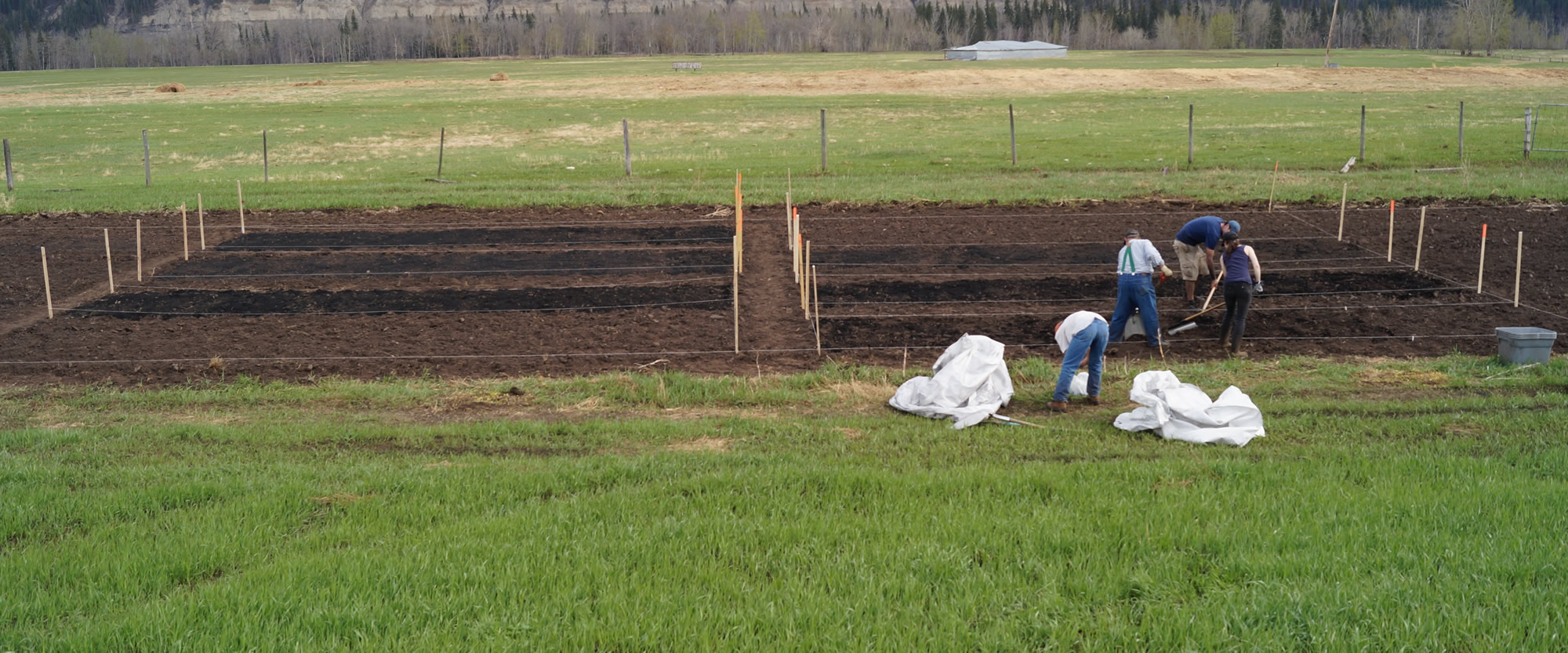
I'm slowly catching up on all the things that I had to place on hold while I was in Haiti. Haiti, and the up coming tests in other countries are clearly providing a wide range of of verifications into the effectiveness of biochar as a soil amendment. As valuable as field work is, there is something to be said for the opportunities to control the environment so as to isolate a few variables.


I am very lucky to have a great team working with me and wanted to share a bit of how it's going. (more updates soon)

Syndicate content