Charcoal

Alterna Biocarbon and Cowboy Charcoal Virginia field trials '09

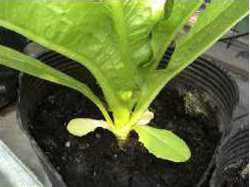
5% Alterna Biochar on Left - 20% on Right.JPG

Field Trials;
 I am field testing for the 09 corn season with JMU and consultation  Dr. Hepperly at Rodale Institute.

Ten research priorities were identified at the IBI conference, The following priorities I hope to address:
• 1- Economy research/market research
• 2- plant+soil research depending on biochar
• 5- field trials
• 8- application to soil (depending on agricultural or other
systems/remediation`)

Planting date: June 24th.
Two split plots , which each are split into a 20% (27 tons/Ac) & 5% (7 tons/Ac) application rates,
All chars soaked in tarps for 1 month, all chars were mixed 1:2 by volume with finished poultry litter compost and roto-tilled to 5 inch depth.

3 treatment groups with 3 replications
Char+ Compost
Char+ Compost + soluble NPK (soaked in char)
MYC+Char+Compost ("Dr. Mike's" Mycorrhiza corn inoculent)
Charcoal #1: Alterna Energy Biocarbon
Charcoal #2: Cowboy Hardwood Lump Charcoal

Soil Testing:
Dr. Mike Amaranthus of Mycorrhiza Applications ( http://www.mycorrhiza.com/ ) has  supplied his granular corn MYC , applied at planting, and lab support for harvest root analysis.
Dr. Kristine Nicoles of ARS, their head glomalin researcher, will also run soil test at Harvest
Lynn Rogers of Microbial Matrix will be testing for functional microbe groups

Total wet weight of corn biomass will be collected for each treatment group.

Much Thanks to:

 James Madison University / I.S.A.T., Dr. Wayne Teal - for providing a student for work and help in publication.

Local farmers Keith Sheetz and Andy & Jack Dixon

Dr. Paul Hepperly of Rodale Institude in PA. for consultations and his sister study in cow-peas.

Special thanks to Ecotechnologies Group for funding both of our studies.  http://www.ecotechnologies.com/index.html

The soil carbon bond can lead to an integration of organic and commercial agriculture practices. Biochar is a tool for both, for organic to increase its already-sustainable credentials, for chemical agriculture to at least halt soil carbon mining and seriously reduce nutrient runoff. The carbon sequestration bond can lead to a marriage of the best practices from both systems of agriculture to build soil into a biologically vital synergistic organism.

I hope to demonstrate this in my field trials with Roundup-ready corn, with the consultation of the Rodale Institute. Soil test for the full spectrum of food web organisms should ferret out the affinity of BioChar with these organisms in the context of standard chemical agricultural practices, and at Rodale with organic practice.

Erich J. Knight
Eco Technologies Group Technical Adviser
University of California Riverside advisory board member
Shenandoah Gardens (Owner)
1047 Dave Barry Rd.
McGaheysville, VA. 22840
540 289 9750


Energy Cost of Charcoal

Last updated March 26, 2009

Energy Cost of Charcoal
Bryce Nordgren, (Rev) March 26, 2009

Because I really had no idea about how much energy it takes to make
charcoal, I made a table from the specs of the Chinese equipment posted by
gordon eliot. Then I calculated the "Energy Cost" of each component in
(MJ/kg). Finally I aggregated the energy costs from the "suggested
charcoal plants" to get an idea of the energy cost of the entire system.
Note that all of their plants use the new high efficiency coal bar
machine. This should represent a best case scenario: maximum rated
charcoal production at rated power. If you make less charcoal and consume
the same power, the energy cost goes up.

Consider this a first step in understanding the energy efficiency of the
entire process. To complete the analysis, we would have to know the energy
content (MJ/kg) of the produced charcoal. The big question is: can you
power a 30kW generator with the syngas in order to take the small charcoal
plant off the grid?

I hope this comes thru. I'm pasting the tables as html into the mail
message. I'm also attaching the spreadsheet from whence these tables came
in OpenDocument format. I exported the OpenDocument spreadsheet into excel
(attached). This retains the equations so people can plug in their own numbers?
The "source" of the numbers is the Gongyi Sanjin Charcoal Machines Factory:
http://tech.groups.yahoo.com/group/biochar/message/5534.

Charcoal Plant Proposals
# Description Components (MJ/kg) Total
Crusher Drier Coal-bar
1 25-30MT per month 0.00 0.05 0.17 0.22
2 80-100MT per month 0.09 0.03 0.17 0.29
3 180-200MT per month 0.14 0.02 0.17 0.32

Note that the bigger crushers have a higher energy cost than the small
crushers. I would have expected the reverse. Also, the high-efficiency
energy saving coal bar machine is less efficient than the multi-function
coal bar machine. The net result is that larger charcoal plants appear to
be less efficient (have a higher energy cost) than smaller plants. As the
table shows, inefficiencies in the crusher overpower the efficiency gains
by the drier. The most efficient small scale plant would include the 11kW
coal bar machine instead of the "high efficiency" 15kW one.

This message is intended to give ballpark figures for the energy cost of
producing biochar using a sample of COTS equipment specifications. It
does not represent an endorsement or criticism of the vendor by any
agency, department, or program of the United States Government.

Bryce Nordgren
bnordgren@fs.fed.us

Charcoal Use in Container Growing Media

Charcoal in Container Growing Media
Tom Miles, January 11, 2009

P Pine Grown in Vermiculite (Left) and Charcoal (Right) MediaP Pine Grown in Vermiculite (Left) and Charcoal (Right) Media

After visiting Richard Haard and Larry Williams in early 2007 I started discussing the use of charcoal with various nursery growers and researchers in the West. A commercial nursery in California became interested in substituting charcoal for vermiculite in a growing media - soilless substrate - for container grown tree seedlings.

There could be both financial and ecological benefits from using charcoal in place of vermiculite. Vermiculite is increasingly expensive, especially in the quantities used by commercial nurseries. Locally made charcoal should be cheaper. Vermiculite has a poor carbon footprint since it is heated to 1000 C (1832 F) in processing and transported long distances, often imported. Charcoal that is made locally as a byproduct of energy production could be used in growing media. Since it would be planted in the forest with the seedling the carbon sequestration would be permanent.

The nursery uses a growing media made of combinations of peat (50%), bark (20%) and vermiculite (30%). Bark is a common material in Northwest nurseries and has been studied extensively. (See Landis, Altland, Buamscha, Scagel). The grower tested seven mixtures substituting charcoal for vermiculite (up to 30% of the mix) and substituting compost for peat, another expensive substrate.

Each blend was placed in two Styrofoam blocks containing 112 plants for a total of 896 plants including the control. Ponderosa pine was grown in all containers.

Charcoal was gathered from mixed conifer burns in a local watershed. It was crushed and screened through a 1/4 inch (6 mm) screen.

The bulk density of the charcoal was 14.6 lbs/ft3 (0.23 g/cm^3 ) compared with vermiculite at 4-10 lb/ft3 (.06-.160 g/cm^3 ); bark at 0.17 to 0.20 g/cm^3 ; and peat at 0.08 g/cm^3. Perlite and pumice are also used in some nursery mixes. They are denser with perlite at 0.32-.4 g/cm^3 and pumice at .38-.66 g/cm^3 .

The density of the 30% charcoal mix 15.4 lb/ft3 (0.25 g/cm3) was similar to the control at 14.6 lb/ft3 (0.23 g/cm3). The other blends were somewhat heavier at 18-29 lb/ft3 (0.29-0.47 g/cm3).

Water availability was similar for the 30% char (67%) to the 30% vermiculite control (68%) and slightly less (48-60%) for the other mixes. 50% is typical. At loading it was noted that the char mix was "very hydrophobic."

Air-filled porosity was similar (14%) for the 30% charcoal to the 30% vermiculite control (16%) and in a similar range (14%-19%) for the other mixes. Typical is 12-15% with a maximum of 25%.

pH was 5.2 in the 30% vermiculite control mix and 6.1 in the 30% charcoal mix. Substitution of compost for peat in the mixes raised the pH to between 7.1 and 7.5.

At the time of my visit last week both plant health and root growth looked the same for the 30% char and 30% vermiculite. Root plugs were firm. The grower is both surprised and satisfied with the success of the charcoal substitution and will be doing further testing after a closer evaluation of the plants.

Tom Miles
www.terrapreta.bioenergylists.org/

Links:

Haard, Richard, FourthCorner Nursery, Washington, http://terrapreta.bioenergylists.org/taxonomy/term/229

Landis, T.,D., 1990. Containers and Growing Media,Vol 2, The Container Tree Nursery Manual, Agricultural Handbook 674, Washington,D. C.: US Department of Agriculture Forest Service 41-5.
http://www.rngr.net/Publications/ctnm/Folder.2003-05-16.0558

Landis, T.D. and Morgan, N. 2008. Growing Media: Overiew and Update Preentation to Western Forest and Conservation Nursery Association, Missoula, MT. (attached)

Altland,J Baumscha G-Nutrient Availability from Douglas Fir Bark in Response to Substrate pH
http://www.ars.usda.gov/research/publications/publications.htm?SEQ_NO_11...

Gabriela Buamscha and James Altland, Pumice and the Oregon Nursery Industry
http://oan.org/displaycommon.cfm?an=1&subarticlenbr=162

Altland, J, Changing Container Substrate pH: What are the affects of peat moss, lime source and lime rate? http://oan.org/displaycommon.cfm?an=1&subarticlenbr=20

Buamscha, G, Container no-brainer, The physical properties of substrates play a big part in crop health and costs, Oregon Associationof Nurseries
http://oan.org/displaycommon.cfm?an=1&subarticlenbr=452
http://www.rngr.net/About/personnel

Scagel, Carolyn, Container Soilless Substrate Component Fertility for the Northwest Nursery Industry http://www.ars.usda.gov/research/projects/projects.htm?accn_no=412543
Publications: http://www.ars.usda.gov/pandp/docs.htm?docid=12357

The Charming Bamboo Charcoal in Taiwan

Last updated December 27, 2008

The Charming Bamboo Charcoal in Taiwan
Taipei Municipal Daan Vocational Industrial High School, Taipei, Taiwan, Taiwan, Cyberfair 2008, February 2008

Bamboo Charcoal Fertilized VegetablesBamboo Charcoal Fertilized Vegetables

The Care for the Environment

The Project

Description of Our Community

In this community there are consumers like us who are interested in environment-friendly products, local business people who are trying to make use of natural resources, and research institutes who are helping make the economy and the environment better. Our project hopes to connect these three kinds of people so that we can know each other better and care more about our environment.

Summary of Our Project

Our project is about bamboo charcoal, its characteristics and functions in terms of environmental protection and applications to daily life. With its high utility, it is seen as a valuable natural resource for our future life.

Biochar Trial 2 - Design [Draft]

Biochar Trial Photos
Empty Planting Trays on Rack Fine Wet Processed Charcoal Settling in Flask Bamboo Feedstock Softwood Chip Feedstock
Charcoal Production in Woodgas Stoves Charcoal Grades Char Measurement  
Amended Pots Prior to Mixing Pots Mixed and Seeds Sown Growth After 9 Days Wheat and Peas Seperated to Avoid Shading

Some design features below:
Exploring interaction effects of feedstock type, soil, char application
rate, crop species, char size, fertilization, and mycorrhizal fungi.
No repetition (n=1), this loses the ability to assign a statistical
significance level to results, but allows more interactions (96 unique
combinations, 96 pots) to be tried given limited resources.

Charcoal produced in WoodGas stoves.
Char yield 12-18% (char mass/air dry biomass mass) (ie not adjusted to conventional dry weight yield unit, yet).
Fine Char - Blended and sieved to 230 mesh (<63 micron).
Coarse Char - Blended and sieved to between ~24 mesh - 8 mesh.
Fertilizer - 4-4-4 NPK Organic (bone meal, feather meal...)
Potting Soil - Potting Mix
Sandy Soil - Mixture of Horticultural Sand and Sandy Loam from Central Valley

Pots arranged in random spatial order (to randomize light/watering variation). Trays rotated to limit effects of light/watering variation.
Automatic drip emitter watering. Pots grown in enclosed cage outdoors.

Blocks - ( 8 pots/block)
    Fertilizer {Yes,No}
    Plant {Wheat, Pea}
    Soil {Sandy, Potting}

Blocks - (12 blocks * 8 pots/block = 96 pots)
    B1 -    Char (0 g)
    B2 -    Char (1 g, Pine, Fine)
    B3 -    Char (1 g, Pine, Coarse)
    B4 -    Char (1 g, Bamboo, Fine)
    B5 -    Char (1 g, Bamboo, Coarse)
    B6 -    Char (5 g, Pine, Fine)
    B7 -    Char (5 g, Pine, Coarse)
    B8 -    Char (5 g, Bamboo, Fine)
    B9 -    Char (5 g, Bamboo, Coarse)
    B10 -   Char (0 g) + Mycorrhizae
    B11 -   Char (5 g, Pine, Coarse) + Mycorrhizae
    B12 -   Char (10 g, Pine, Coarse)
 

Gardening with Biochar FAQ (Wiki)

Last updated June 02, 2008

Gardening with Biochar FAQ (Wiki)
Philip Small, May 21, 2008

Welcome to a Gardening with Biochar FAQ!
... a work in progress...

When gardeners add biochar to garden soil, we are, in effect attempting to follow in the footsteps of the originators of Terra Preta. Because we don't know exactly how that process worked, nor how we can best adapt it outside its area of origin, we are left to discover much of this by experimenting with our own gardens and comparing observations within our own communities.

See:

Gardening with Biochar FAQ (Wiki)

More Trials

Last updated May 20, 2008

More Trials
Max Henderson,May 12, 2008

If you can bear with me here is some info from last weekend’s
trials. Various conclusions are probably of little scientific merit and may well be blindingly obvious but I’ll include for those who maybe don’t have one of these exciting toys.


  1. The original second–hand house brick kiln had 15cm/6” (when will the US
    join the rest of the world?) gaps between the drum and the bricks on both
    sides, and a relatively shallow space under the drum for the initial fire.
    The idea was that it would be easier to add fuelwood on the sides, but in
    fact this reduced the effectiveness of the insulation.
  2. I re-laid the bricks to give a greater fire space under the drum for the
    initial fire, and moved the side walls inwards so that the only gap was
    between the ridges of the drum and the bricks. The basic concept was to
    apply the heat from underneath, and to insulate as best possible (under
    the primitive circumstances) against any unnecessary heat losses
  3. The drum was loaded with around 100kg of old dry dense hardwood, plus 2 x 75mm
    thick telephone books and some tyre scraps I had collected from beside the
    highway.
  4. Scrap dry wood was loaded under the drum and fired at 17:00. Once that achieved
    a significant burn I added bricks to the open front to further improve
    insulation
  5. I’ve learnt that a slow initial burn is best as opposed to a blast. The
    assumption here is that the mass of material in the drum (despite MC of
    maybe less than 12%), needs gradual heat (given the substantial insulating
    properties of dry dense wood) well before the stage when pyrolisis can
    begin and be sustained. I’ve done the opposite –high initial heat, quick
    gasification, and then no continuation. There is a lot to discuss here,
    including the use of ‘waste’ heat to raise the temp and reduce MC, in the
    following batch.
  6. By 18:00 the first gas burn had started and by 18:15 the 8 x 8mm holes in the
    base of the drum were all roaring
  7. This was about the 10th trial, and with each the seal on the drum
    lid has become less effective. This photo shows the burn of the escaping
    gases through these leaks. In a totally un-scientific guess I’d suggest
    that at least a litre of gas/second was burning happily through the gaps.
    None of this energy was in any way contributing to the char process. These
    waste gases burnt for 2 hours.


  1. With all the jets alight I then added bricks to the top of the drum, giving
    better insulation.

  1. By 19:00 the drum was glowing red hot when seen through the gaps in the top
    bricks, except for a small strip down the centre of the top. I dropped
    some glass from a broken bottle in a couple of the gaps, and within
    minutes the glass became malleable.
  2. Around 21:00 the gas burn started to slow down, and by 22:00 the last flame was
    gone.
  3. The front bricks were removed at dawn, and by midday the drum was cool enough
    to be opened without a risk of the char catching alight.

  1. The
    charring was complete, including the tyre rubber, the 2 phone books, and
    dense hardwood as large as 20cm/8” in diameter.
  2. Volume
    loss was in the region of 20% at a guess.


It is the energy output that continues to stun me. The
volume of gas that escaped through the poor lid seal was very substantial and
burnt for over 2 hours. In addition, the gas burning under the drum was
obviously far in excess of the volume required to maintain the char process,
just using the red heat of the drum as an indicator. And on top of that was the
vast heat energy given off to the atmosphere despite the attempts to provide
insulation.


I’ll continue making batches using this crude system
every weekend, but there’s not a lot more to prove and I now really need to
take the lessons learnt and build a decent drum and kiln. In particular the
effectiveness of the insulation will be a considerable determinant in the efficiency
of the process. I will aim for a castable refractory kiln in a similar shape to
the current brick one, with relatively narrow gaps between the drum and the
refractory except for the “firebox” underneath. It will have two hinged doors
at the front – the upper one allowing the drum to be slid out above the lower
firebox door. A similar upper door also for the rear, and this will also have
an adjustable vent to allow heat to escape rearwards. This would lead into a
second chamber where another drum loaded with wood is waiting its turn in the
queue, being pre-heated at the same time. When one drum has completed the char
process, it will be slid out to cool, the drum in the heat chamber at the rear
is slid in to take its place, the refractory is at high temp already, the gas
jets are lit, doors closed, the third drum is loaded and slid into the warming
chamber….


The drums to be fabricated from boiler plate, and
maybe with domed lids and toggle screws to clamp down. Then I need to work out
how to plug in a pipe or hose to vent off excess gas, plus a compressor and a
pressure vessel to store. And that pre-supposes a capacity to record
temperatures inside the drum so that this info can be fed to a controller that
will make decisions when and if to pipe off some gas for storage. Plus a
serious gas burner system under the drum, because I believe we can eliminate
the need for wood fuel and just use some of the stored excess gas. And then
some boiler tube at an upper level through which water can be piped and fed into
a large storage tank as a heat bank, and then into the house and/or a
greenhouse in winter through sub-floor piping, radiators, or a concrete storage
tank under the slab. I don’t have a house at the farm yet or even a greenhouse
much less an electricity supply but that just adds some more interesting
challenges. Its down to time and dollar availability.


In the meantime I’m continuing with the garden trials,
and certainly there is visible evidence of improved growth and vigour in the
plots which had the char added. The best is the one that also had some cocopeat
organic matter added, as well as some worm castings. Digging down a few inches
and grabbing a handful gives this sweet-smelling crumbly mix, laden with
organic matter and just seeming to be bursting with goodness. Hardly a
scientific analysis but I’ve been handling and smelling soil for a long time
and this lot is just about good enough to eat.


Max H

Agrichar Video

Last updated April 26, 2008

Agrichar Video
Australian Broadcasting Corporation, 2007

Video on Agrichar, International Agrichar Initiative conference (April 2007), BEST Technologies, and use of agrichar in Australia.

http://www.abc.net.au/science/broadband/catalyst/asx/Agrichar_hi.asx

Simple charcoal kiln

Last updated April 27, 2008

Simple charcoal kiln
Folke Gunther, April 24, 2008

A wonderfully simple method for making charcoal at home or on the allotment.

"http://picasaweb.google.se/folkeg/TheSimplestOfTheSimple

--

There is a wide demand for charcoal kilns to be used by anybody having an allotment or garden sized plot. The idea of making char of surplus biomass instead of firing it is widely spread in Latin America (and Japan?). Burning the pyrolysis gasses instead of emitting them makes the method comparatively safe, although not efficient regarding their potential utilisation of gasses.

I agree that his is a very small scale method, bu imagine 2 billion people having it, making 1 kg char a week for their lots. That would imply about 0.1 Gt annually, or 5% of what would be necessary to sequester for making a change.

Naturally, this is not the method to save the world from entering a tipping point, but it could well be of some help.

Besides, making 50 kg of char annually, would certainly make a change for the production form a normal sized allotment, certainly so if you go on for several years.

I don't agree that using barrels for making char automatically would imply methane emissions. That must certainly be a consideration depending of the charring method, not the material used.

----------------------------------------
Folke Günther
Kollegievägen 19
224 73 Lund
Sweden
Phone: +46 (0)46 141429
Cell: +46 (0)709 710306
URL: http://www.holon.se/folke
BLOG: http://folkegunther.blogspot.com/

Sewage Sludge Charcoal

Last updated November 06, 2008

Sewage Sludge Charcoal
Michael Antal,University of Hawaii, April 2008
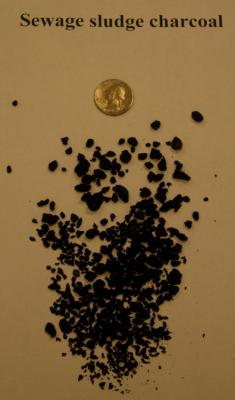
Sewage Sludge Charcoal

I am pleased and somewhat surprised to report that raw sewage sludge is a good feedstock for charcoal production. Details are available on the HNEI website below.

www.hnei.hawaii.edu
Flash Carbonization

Regards, Michael.

Michael J. Antal, Jr.
Coral Industries Distinguished Professor of Renewable Energy Resources
Hawaii Natural Energy Institute
POST 109, 1680 East-West Rd.
Honolulu, HI 96822

phone: 808/956-7267
fax: 808/956-2336
www.hnei.hawaii.edu

Syndicate content