Gasification

Gasifier Charcoal as a Substitute for Vermiculite in Container Growing Media

Last updated November 08, 2009

Gasifier Charcoal as a Substitute for Vermiculite in Container Growing Media
Tom Miles, August 22, 2009
P Pine Seedlings in 25% BiocharP Pine Seedlings in 25% Biochar
Our second trial of biochar as a substitute for vermiculite in container media for growing tree seedling has proved successful. These tests are by a private nursery to determine if charcoal from a gasifier heating system can be used in container growing media.

Last year weathered charcoal was collected from forest fire burns, milled, and used as a direct substitute for vermiculite in up to 50% of the container mix. Some of those trees have been retained in containers for a second year and still look good. At that time the forest tree nursery concluded that the biochar could be used for up to 50% of the mix with some adjustments to plant nutrition.
http://terrapreta.bioenergylists.org/charcoalmedia

This year the nursery filled a larger sample with media containing 25% biochar from a gasifier.

During gasification the char is made as wood (mixed Pine and Douglas Fir from the California Coast range) is subjected to temperatures of 1000 C (1832 F) in an oxidizing atmosphere and 850C (1562 F) in a reducing environment. Tars are volatilized and combusted to carbon dioxide and water. Tars are completely consumed in the process. The CO2 reacts with the devolatilized charcoal to form a gas rich in carbon monoxide and hydrogen. The gas will be used in place of propane to heat greenhouses.

Water is condensed from the gas. The recovered water (condensate) could probably be used to supplement irrigation. It is clear to light lemon colored and has a faint odor. It has a pH of 7.1 and is highly saline with an electrical conductivity (EC) of 5.1 mS/cm. It will be analyzed for composition.

Less than 5% of the dry fuel is recovered from the gasifier as a charcoal residue. The charcoal residue is still being characterized. It is small in size and puffy with powdery fines that are like a confectioner’s sugar. Due to the conditions of carbonization it is likely that it has very low labile (volatile) carbon, high surface area, high CEC and high pH. (High pH does not appear to have affected nutrient availability in previous trials even up to 50% charcoal in the container mix.) It was tested at the nursery as biochar.

Ponderosa pine seedlings grown in 25% gasifier charcoal since June were identical in root development and plant growth as those grown in the vermiculite mix. Two of each are shown in the attached image.

Future trials will use biochar in media to grow other tree species.
Condensate from Wood GasCondensate from Wood Gas

Nutrient Recovery from Integrated Cellulosic Biorefineries

Last updated September 22, 2008

Nutrient Recovery from Integrated Cellulosic Biorefineries (link)
Robert Brown, Iowa State University, Bioeconomy Institute 2008

"That Iowa has some of the richest soil in the world is no secret, and a group of researchers at Iowa State University would like to ensure that Iowa’s soil retains its high quality. These researchers are investigating alternative cropping systems and practices such as applying biochar (also called agrichar) to the soil to protect it from the loss of organic matter and fertility that could accompany the proliferation of biorefineries across Iowa’s landscape. The Iowa State research team is looking at the impact of the removal of large amounts of crop residue from agricultural fields. Their goal is to ensure that farmers will be able to generate the large amounts of biomass feedstocks that cellulosic biorefineries will need to meet the
demands of a developing bioeconomy, while also being able to return carbon
and important nutrients such as phosphorus, potassium and nitrogen back to the soil."

See Links

Potato & Terra Preta - 2007

Last updated December 29, 2007

PotatoPotato
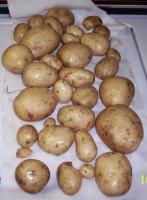
This is Puffergas' first test of growing potatoes in switchgrass compost. The potatoes were grown in containers and charcoal was added to the compost.
See link below:
Potato 2007 by Puffergas

Conversion of Municipal Solid Waste (MSW) into Charcoal & Producer Gas

Last updated April 19, 2007

Conversion of Municipal Solid Waste (MSW) into Charcoal & Producer Gas
Jalaj Kr. Chaturvedi, Shivam Enterprises, Kolkata, April 3, 2007
Charcoal Pellets from MSW

Philip Small Blog: Making Charcoal with an Inverted Downdraft Gasifier

Last updated February 17, 2007

Phillip Small Blog: Making Charcoal with an Inverted Downdraft Gasifier
Phillip Small,February 10, 2007

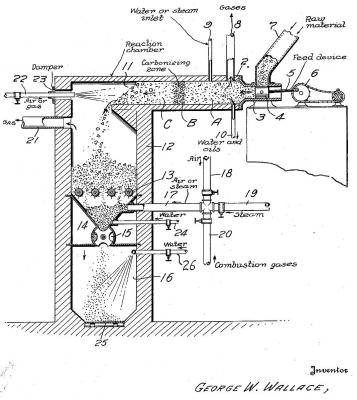
Phillip Small described how he uses an inverted downdraft gasifier inspired by Tom Reed and Ray Garlington to make charcoal for soil fertility experiments.

Inverted downdraft gasifier photos on Flickr

From the Hypography Science Forum - TerraPreta

Syndicate content