Blog

Alterna Biocarbon and Cowboy Charcoal Virginia field trials '09

5% Alterna Biochar on Left - 20% on Right.JPG

Field Trials;
 I am field testing for the 09 corn season with JMU and consultation  Dr. Hepperly at Rodale Institute.

Ten research priorities were identified at the IBI conference, The following priorities I hope to address:
• 1- Economy research/market research
• 2- plant+soil research depending on biochar
• 5- field trials
• 8- application to soil (depending on agricultural or other
systems/remediation`)

Planting date: June 24th.
Two split plots , which each are split into a 20% (27 tons/Ac) & 5% (7 tons/Ac) application rates,
All chars soaked in tarps for 1 month, all chars were mixed 1:2 by volume with finished poultry litter compost and roto-tilled to 5 inch depth.

3 treatment groups with 3 replications
Char+ Compost
Char+ Compost + soluble NPK (soaked in char)
MYC+Char+Compost ("Dr. Mike's" Mycorrhiza corn inoculent)
Charcoal #1: Alterna Energy Biocarbon
Charcoal #2: Cowboy Hardwood Lump Charcoal

Soil Testing:
Dr. Mike Amaranthus of Mycorrhiza Applications ( http://www.mycorrhiza.com/ ) has  supplied his granular corn MYC , applied at planting, and lab support for harvest root analysis.
Dr. Kristine Nicoles of ARS, their head glomalin researcher, will also run soil test at Harvest
Lynn Rogers of Microbial Matrix will be testing for functional microbe groups

Total wet weight of corn biomass will be collected for each treatment group.

Much Thanks to:

 James Madison University / I.S.A.T., Dr. Wayne Teal - for providing a student for work and help in publication.

Local farmers Keith Sheetz and Andy & Jack Dixon

Dr. Paul Hepperly of Rodale Institude in PA. for consultations and his sister study in cow-peas.

Special thanks to Ecotechnologies Group for funding both of our studies.  http://www.ecotechnologies.com/index.html

The soil carbon bond can lead to an integration of organic and commercial agriculture practices. Biochar is a tool for both, for organic to increase its already-sustainable credentials, for chemical agriculture to at least halt soil carbon mining and seriously reduce nutrient runoff. The carbon sequestration bond can lead to a marriage of the best practices from both systems of agriculture to build soil into a biologically vital synergistic organism.

I hope to demonstrate this in my field trials with Roundup-ready corn, with the consultation of the Rodale Institute. Soil test for the full spectrum of food web organisms should ferret out the affinity of BioChar with these organisms in the context of standard chemical agricultural practices, and at Rodale with organic practice.

Erich J. Knight
Eco Technologies Group Technical Adviser
University of California Riverside advisory board member
Shenandoah Gardens (Owner)
1047 Dave Barry Rd.
McGaheysville, VA. 22840
540 289 9750


BIOCHAR URINALS

Last updated April 30, 2009

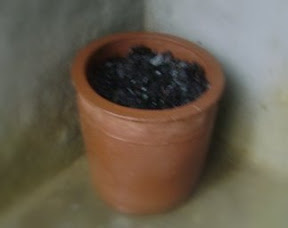
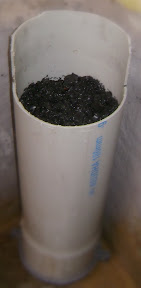
1. GEO BIOCHAR URINAL - PVC and 2. GEO BIOCHAR URINAL - CLAY

Biochar / charcoal can be used for tapping the Nitrogen and other useful elements. Simple urinals are designed http://e-biocharurinals.blogspot.com/ for tapping the nitrogen and other useful elements for using as a soil amending material for improving the quality of the soils, increasing crop production, addressing the global warming by reducing the NOx emissions, avoiding artificial fertilizers, keeping the toilets clean and odor free, etc.

Two sets of prototype Urinals - PVC urinal and Clay pot urinal are designed and being used by GEO.

The production of fertilizers require lots of energy, in many countries Natural gas is used for producing urea in large quantities. This demand is ever growing and we dont have enough energy to meet the demands. The complex fertilizers are also contributing to alkalinity of the soils.

From the below information we can see that there is a great potential to tap nitrogen from Urine, as biochar has an affinity to tap nitrogen, using charcoal for tapping the Nitrogen and other elements is a great opportunity to find solutions for many problems. Urine is a great source of Nitrogen, Phosphorous and Potassium

For more details please see this blog: http://e-biocharurinals.blogspot.com/

Also see the following links: http://e-opentoilets.blogspot.com/ 

http://e-terrapretarooftopexp.blogspot.com/

Biochar Makes Organic Farming Practical

Last updated March 10, 2009

Biochar Makes Organic Farming Practical
AJ Morris,Organic Gardening December 18, 2008

"Almost every farmer is aware of organic techniques for fertilizing crops, yet the majority still use chemical fertilizers — why is that? Dig a little deeper (excusing the pun) and you will find that it is not uncommon for a family farm to have an organic garden for their own vegetables, but still use chemical fertilizers on their commercial crops. They know organic is better, so why use chemicals?

The answer lies in simple economics. Preparing compost is labor intensive, and labor is expensive. Also, specialized farmers rarely produce the right mix of high-carbon and high-nitrogen materials to produce compost in sufficient quantities to keep large acreage productive. Then there are the issues with pest control, which is easier with chemicals. That is one area I can’t claim biochar will help much — but for the soil fertilization it solves several problems at once.

The rising cost of petroleum-derived fertilizers has some traditional farmers taking a second look at organic methods already — add biochar to the mix and the equation turns around completely."

See full story at: Organic Gardening - Biochar

Terracarbona.com - A New Website for the Promotion of Biochar Research and Experimentation

Last updated February 27, 2008

Terracarbona.com - A New Website for the Promotion of Biochar Research and Experimentation
Chris Braun. February 27, 2008

A new website for the promotion of biochar research and experiments was born !
http://terracarbona.com

You can there discover several biochar-related projects, most of them still in active development . If you are performing biochar soil amendmend trials yourself, your contribution to CharDB or to the Field Trial Portal would be highly appreciated!
And if you haven't done it so far but would like to start experimenting, you can also find useful resources, links and contacts to help you.

This website is still in its infancy and any constructive comment, critic, question, advice... is very important for further development ! For that you can use the devoted forum:
http://z15.invisionfree.com/CharDB/index.php?showforum=2

Thanks for your contribution!
Sincerely yours,
Chris
terracarbona@bionecho.org

Philip Small Blog: Making Charcoal with an Inverted Downdraft Gasifier

Last updated February 17, 2007

Phillip Small Blog: Making Charcoal with an Inverted Downdraft Gasifier
Phillip Small,February 10, 2007

Phillip Small described how he uses an inverted downdraft gasifier inspired by Tom Reed and Ray Garlington to make charcoal for soil fertility experiments.

Inverted downdraft gasifier photos on Flickr

From the Hypography Science Forum - TerraPreta

Transect PointsBlogspot: View From the Earth Down

Last updated March 08, 2007
in

Terra preta: how biofuels can become carbon-negative and save the planet

Last updated January 22, 2007

Terra preta: how biofuels can become carbon-negative and save the planet
Biopact, Friday, August 18, 2006

Most often, biofuels are seen as being 'carbon- neutral' in that they do not add CO2 to the atmosphere. When they are burned for energy, CO2 is emitted, but it gets taken up again as the new biomass grows, thus closing the carbon cycle and resulting in a neutral balance. This is the commonly held view of how biofuels are 'green'. In an early text, however, we hinted at the possibility of bioenergy doi

Syndicate content