Yarrow

David Yarrow TERRA: The Earth Restoration & renewal Allliance dyarrow@nycap.rr.com www.championtrees.org

Founders Meeting, Biochar Northeast

Last updated October 10, 2009
in

YOU ARE INVITED TO THE
Founding Members Meeting
of
Biochar Northeast, inc.
not-for-profit association to study, advocate and use biochar in environmental management
and the
Northeast Biochar Research Consortium
collaboration of institutions, industry, farmers, foresters & landowners

8pm, Friday, November 13, 2009
Campus Center, UMass Amherst

In our onrushing confrontation with multiple limits
of our planet’s Carrying Capacity,
Earth-changing events are moving rapidly,
and this calls for quick collective social action.
We must form organizations to advance this new carbon-negative,
soil-regenerating, species-saving strategy and its technologies.
Therefore, this Founders’ Meeting will ratify a call to action,
two instruments of organization, and two initial Board of Directors:
Biochar Northeast, inc.
to facilitate & accelerate connections, services, policy & capital
to rapidly disseminate & deploy carbon-negative strategy using biochar as a primary tool
Northeast Biochar Research Consortium
to monitor, evaluate and recommend biochar production technologies,
and biochar use of on soils, crops, animals, foods, farms, forests & watersheds.

5pm Social Hour downstairs auditorium lobby
6pm Banquet Dinner upstairs 10th floor dining room
7pm Insight, Inspiration & Awards
The Road Ahead:
Carbon-Negative Food & Energy
for Northeast Communities
8pm Founders Meeting open to all supporters
9pm Meeting Adjourns — Celebration Begins

The Banquet Dinner is $35, by reservation only, and space is limited
Reserve your seat when you register for the daytime Biochar Symposium:
www.nsm.umass.edu/biochar09/
Anyone can attend the after-dinner Founding Members Meeting
The Dining Room will be opened to all members after dinner
To participate and vote at the Founders Meeting, enroll as a Biochar Northeast member:
complete a short survey and pay a $25 membership fee
www.carbon-negative.us/membership
To nominate a member to either initial Board of Directors, send email to:
dyarrow@nycap.rr.com

2009 Events Calendar Carbon-Negative Northeast Network and Biochar FAQ

Last updated November 28, 2008

2009 Events Calendar Carbon-Negative Northeast Network
http://tech.groups.yahoo.com/group/carbon-negative
Communities Confronting Climate Change, Energy Independence and Food Security
David Yarrow,November 2008

Carbon NegativeCarbon Negative

2009 Events Calendar
final version. see attached .pdf file
one page

i am assembling information into two FAQ sheets, one on biochar, the other on carbon-negative.

Attached is my first draft of the biochar FAQ.

for a green & peaceful planet,

David Yarrow
Turtle EyeLand Sanctuary
44 Gilligan Rd, East Greenbush, NY 12061
cell: 518-881-6632
www.championtrees.org
www.OnondagaLakePeaceFestival.org
http://tech.groups.yahoo.com/group/carbon-negative
www.farmandfood.org
www.SeaAgri.com

David Yarrow: Confronting our Climate Change Challenge - the Biochar Strategy

Last updated August 01, 2008
in

David Yarrow: Confronting our Climate Change Challenge the Biochar Strategy
David Yarrow, July 28, 2008

I've revised my powerpoint illustrations for my "confronting our climate change challenge" talk about carbon-negative biochar strategy. They are now available as auto-running powerpoint slide shows, with "click to continue" prompts. I saved them in the version 1997-2003 format, although I created them with the new vista 2007 version.

The full set of 47 slides is a 20mb powerpoint file. I divided this into 9 smaller files of 1.4mb to 3.5mb:

1_Climate Change Introduction - 13 slides -- 2.1mb

2_Terra Preta History 1 - 5 slides -- 3.4mb

3_Terra Preta Research 1 - 3 slides -- 3.5mb

3_Terra Preta Research 2 - 6 slides -- 3.2mb

4_Biochar 1 NOT -2 slides -- 1.8mb

4_Biochar 2 Backyard -5 slides -- 2.8mb

Coming:
5_biochar 3 industry - 5 slides -- 2.1mb
5_biochar 4 EPRIDA - 3 slides -- 3.3mb
6_climate change close - 5 slides -- 1.4mb
TOTAL -- 23.0mb

for a green & peaceful planet,
David Yarrow
Turtle EyeLand Sanctuary
44 Gilligan Rd, East Greenbush, NY 12061
www.championtrees.org
www.OnondagaLakePeaceFestival.org
www.farmandfood.org
www.SeaAgri.com

Agriculture Carbon Trading

Last updated November 06, 2008
in

Agriculture Carbon Trading

David Yarrow, May 21, 2008


spent all day at a workshop on
trading carbon credits for agriculture at the albany county cooperative extension office. the workshop was targeted for government staff and educators who advise farmers, and farmers themselves. it seems this is a step in the complex process of gearing up for RGGI (www.rggi.org) -- the regional greenhouse gas
initiative cap and trade carbon exchange involving 10 northeast & mid-atlantic states -- which will be implemented beginning 2009. considerable effort was required to get complete agreement from all 10 states on standards, protocols and policies, but the system is open to admit new states.

RGGI is currently being set up for
large electric power producers, since they account for 24% of GHG
emissions, and represent just a few players who are easy to organize and induce to participate. beginning next year, each state will impose emissions caps, focusing on the three principal GHGs: CO2, CH4 (23x C equiv) and N2O (289x C equiv). power plants that reduce emissions under the cap will have "allowances" to sell. power producers that exceed their cap will have to purchase allowances or offsets. the first auction will take place later this year.

farms can qualify to sell
"offsets" to emitters as credits against excess emissions, primarily by sequestering C. offsets must be: REAL, ADDITIONAL, VERIFIABLE, ENFORCEABLE, and PERMANENT. but only three strategies for farms will be recognized:

1) avoided or destroyed methane
(primarily from anerobic manure handling)

2) afforestation (replanting land
with no recent history with trees)

3) conservation grassland (no
till, except ridge till & planting grassland set asides, no hay or
grazing)

in addition, farms can qualify for
renewable energy credits by converting from fossil to renewable fuels.

i am disappointed, but not
surprised, RGGI doesn't recognize any soil sequestration strategy except
conservation grassland. after all, soil is the start and end of the C
cycle, and stores 2.5 times more C than plant biomass, and more
than the atmosphere. yet, no credit is offered for raising soil
organic matter (SOM), largely because such C storage sinks are not permanent, ony remove C for 5 to 25 years, depending on the biomass source -- leaves vs. stems & stalks vs. tree trunks -- and are hard to quantify and verify. and also, RGGI rules currently offer no recognition of the win-win-win strategy of C sequestration with biochar, which removes C for at least centuries, and likely millennia.

during the day, two questions came up from the audience about "charcoal in soil" and "black carbon," but not one speaker knew more than the least about biochar, and none realized that char's reduced C is retained in soil for centuries, or its effects on soil fertility, capacity and microbial complexity.

i handed out copies of the attached
papers, plus the Catalyst article on "Carbon Farmers,"
and brochures about SEA-90 sea minerals and "nutrient dense"
foods. i made two good contacts which will likely lead to biochar
workshops in NY this summer, and i will go talk to RGGI-NY staff in their albany office.

see the website below for further
details. click the "Learn" keyword to download facts sheets
from the C trading training workshop:

http://www.agcarbontrading.org/

Carbon Trading

Market
Opportunities for Agriculture

Carbon Trading:
Market Opportunities for Agriculture

8:30am-5:30pm,
Tuesday, May 20, 2008, free and open to
educators at
any of the 4 sites:

Voorheesville,
New York (live); Greensburg, PA (videoconference);

Georgetown,
DE (videoconference); Boscawen, NH (videoconference)

A
workshop for the Northeast on
Carbon Trading -- a method to reduce
global greenhouse gas emissions by allowing market mechanisms to find the most
cost-effective way to reduce emissions from a variety of sources. There
are opportunities for farm, forest and land management to participate in
greenhouse gas mitigation.

Carbon Trading: Market Opportunities for Agriculture is
hosted by Central New
York Resource Conservation and Development, Inc. (CNY RC&D)
with
funding from Northeast Sustainable
Agriculture Research and Education (NESARE)
. The objective is to give
agricultural educators a basic understanding of the complexities of carbon
trading, while providing them with a set of tools to educate farmers and
landowners about carbon trading.

This workshop is geared primarily to extension agents, soil and water
conservation district staff, USDA staff, and non-profit agricultural educators,
and is open to landowners and farmers as well.

Topics:

  • Introduction to Cap & Trade and Agricultural
    Offsets –Jeni Wightman (Consultant)
  • Agricultural Practices and Carbon Offsets
    –John Duxbury
    (Cornell University)
  • Chicago Climate Exchange and Agricultural Offsets
    –Neil Sampson (Consultant)
  • Regional Greenhouse Gas Initiative Ag Offsets
    –John Marschilok (NY DEC/RGGI)
  • Basic Do’s and Don’ts of Contract Law

    –David Watson (Council of Community Services)

  • Carbon Credits and Whole Farm Planning
    –Phil Metzger
    (USDA-NRCS/CNYRC&D)
  • Farm Experience with Selling Credits

    –Connie Patterson (Patterson Farms)

  • Carbon Credit Economic Scenarios

    –Steve Bulkley (Consultant)

Resource Guide: Attendees
will receive the Carbon Trading: Market Opportunities for Agriculture
Resource Guide
with modular Fact Sheets. These and the Power Point
Presentations will also be available to attendees and the public on this
workshop’s web site after May 20.

Robert Flanagan's Biochar Stove: Carbon Negative Cooking

Last updated October 30, 2007

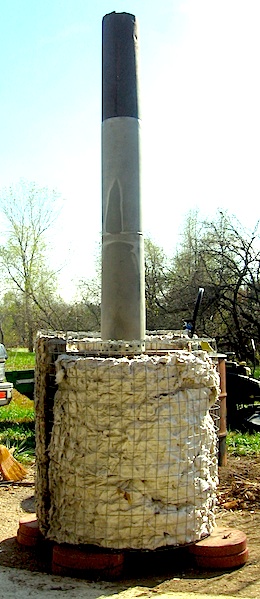
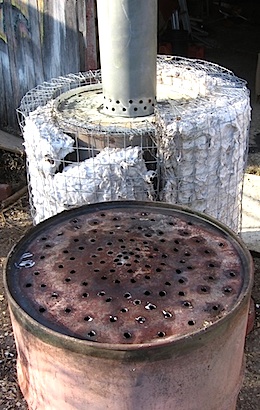
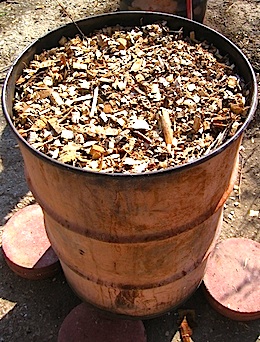
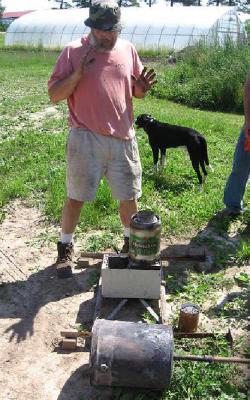
Robert Flanagan's Biochar Stove: Carbon Negative Cooking
David Yarrow, TERRA: The Earth Restoration & Renewal Alliance, October 30, 2007

Syndicate content