Agrichar

Nutrient Recovery from Integrated Cellulosic Biorefineries

Last updated September 22, 2008

Nutrient Recovery from Integrated Cellulosic Biorefineries (link)
Robert Brown, Iowa State University, Bioeconomy Institute 2008

"That Iowa has some of the richest soil in the world is no secret, and a group of researchers at Iowa State University would like to ensure that Iowa’s soil retains its high quality. These researchers are investigating alternative cropping systems and practices such as applying biochar (also called agrichar) to the soil to protect it from the loss of organic matter and fertility that could accompany the proliferation of biorefineries across Iowa’s landscape. The Iowa State research team is looking at the impact of the removal of large amounts of crop residue from agricultural fields. Their goal is to ensure that farmers will be able to generate the large amounts of biomass feedstocks that cellulosic biorefineries will need to meet the
demands of a developing bioeconomy, while also being able to return carbon
and important nutrients such as phosphorus, potassium and nitrogen back to the soil."

See Links

Biochar Trial 2 - Design [Draft]

Biochar Trial Photos
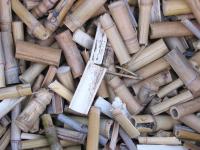
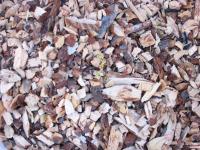
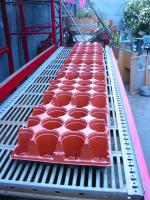
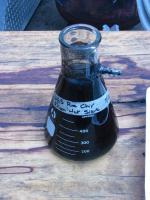
Empty Planting Trays on Rack Fine Wet Processed Charcoal Settling in Flask Bamboo Feedstock Softwood Chip Feedstock
Charcoal Production in Woodgas Stoves Charcoal Grades Char Measurement  
Amended Pots Prior to Mixing Pots Mixed and Seeds Sown Growth After 9 Days Wheat and Peas Seperated to Avoid Shading

Some design features below:
Exploring interaction effects of feedstock type, soil, char application
rate, crop species, char size, fertilization, and mycorrhizal fungi.
No repetition (n=1), this loses the ability to assign a statistical
significance level to results, but allows more interactions (96 unique
combinations, 96 pots) to be tried given limited resources.

Charcoal produced in WoodGas stoves.
Char yield 12-18% (char mass/air dry biomass mass) (ie not adjusted to conventional dry weight yield unit, yet).
Fine Char - Blended and sieved to 230 mesh (<63 micron).
Coarse Char - Blended and sieved to between ~24 mesh - 8 mesh.
Fertilizer - 4-4-4 NPK Organic (bone meal, feather meal...)
Potting Soil - Potting Mix
Sandy Soil - Mixture of Horticultural Sand and Sandy Loam from Central Valley

Pots arranged in random spatial order (to randomize light/watering variation). Trays rotated to limit effects of light/watering variation.
Automatic drip emitter watering. Pots grown in enclosed cage outdoors.

Blocks - ( 8 pots/block)
    Fertilizer {Yes,No}
    Plant {Wheat, Pea}
    Soil {Sandy, Potting}

Blocks - (12 blocks * 8 pots/block = 96 pots)
    B1 -    Char (0 g)
    B2 -    Char (1 g, Pine, Fine)
    B3 -    Char (1 g, Pine, Coarse)
    B4 -    Char (1 g, Bamboo, Fine)
    B5 -    Char (1 g, Bamboo, Coarse)
    B6 -    Char (5 g, Pine, Fine)
    B7 -    Char (5 g, Pine, Coarse)
    B8 -    Char (5 g, Bamboo, Fine)
    B9 -    Char (5 g, Bamboo, Coarse)
    B10 -   Char (0 g) + Mycorrhizae
    B11 -   Char (5 g, Pine, Coarse) + Mycorrhizae
    B12 -   Char (10 g, Pine, Coarse)
 

Agrichar Video

Last updated April 26, 2008

Agrichar Video
Australian Broadcasting Corporation, 2007

Video on Agrichar, International Agrichar Initiative conference (April 2007), BEST Technologies, and use of agrichar in Australia.

http://www.abc.net.au/science/broadband/catalyst/asx/Agrichar_hi.asx

Soils offer new hope as carbon sink

Last updated June 06, 2007

Soils offer new hope as carbon sink
NSW Department of Primary Industries: Science and Research, Australia, Wollongbar Agricultural Institute, 31 May 2007
Steve KimberSteve Kimber

Australian developed technology wins United Nations World Environment Day Award – Press release

Last updated June 10, 2007

Australian developed technology wins United Nations World Environment Day Award – Press release
BEST Energies, Australia, June 5, 2007
Adriana DownieAdriana Downie
BEST Energies wins top honour at the 2007 UN Association of Australia’s World Environment Day Awards for ‘Meeting the Greenhouse Challenge’.

"Burning is bad for you" post

Last updated January 24, 2007

there is an interesting thread here with questions that need answereing
It is from ausergroup who want to use less chemical fertiliser.
SEE
http://groups.google.com/group/Fossil-Free-Landscaping/browse_frm/thread/f593a12c1c943bcd/#
Chris Shorb wrote:
. . .
2-Burning anything is toxic. Benzo-pyrene is a nasty chemical which
actually CAUSES cancer. Anytime we burn organic matter at normal low
temperatures (charcoal, bonfires, open flames, etc.) we create
benzo-pyrene exhaust. Smoking, barbecuing, campfire smoke, candle

Positive Charcoal=Negative Carbon? Why adding charcoal to the Earth's soils will also address climate change.

Last updated January 20, 2007

Positive Charcoal=Negative Carbon?
Why adding charcoal to the Earth's soils will also address climate change.
Ron Larson. Chair, American Solar Energy Society, Solar Today, November-December 2006
"We clearly are making progress on global warming education. Scientific American magazine’s special September-issue theme, “Energy’s Future Beyond Carbon,” focused on ways to achieve a reduced-carbon future, which
experts say is far behind schedule. But like most everything I read on the subject, the articles offered little hope that we can take any of the existing carbon dioxide (CO2), the major contributor to climate change, out of the atmosphere. However, as evidenced by an article in the Aug. 10 issue of Nature (http://www.nature.com/nature/journal/v442/n7103/full/442624a.html), one “negative carbon” possibility seems to be getting another look from scientists: the positive impacts of putting charcoal back into the ground.

Products

Last updated June 15, 2009

Products, Materials and Organisms
Many different materials and organisms make up the agro-ecology of terra preta or black soil. For posts about materials and organisms, please click on the name to the left. This list is automatically updated when new content is added.

Formulated Biochar Products
Products contianing biochar that have been formulated to contain nutrients or beneficial organisms.

  • Biochar+,CarbonChar Group,NC.
    a biological source of beneficial soil microorganisms, enriched substrates and microbial foods. This formulation allows beneficial microbes to survive harsh soil environments, improve nutrient cycling and increase plant health.
  • CharcoalGREEN
    Biochar - an agrichar product inoculated with beneficial soil microorganisms and enriched substrates.
  • Microboost Lakeshore Microboost Inc, Saugatuck, MI
    Products containing biochar and micro-organisms as biostimulants for soil resotration and toxic cleanup.
  • Carbon Capturing™ Soil Amendment eGenesis Industries. CA. eGen's Carbon Capturing TM, soil amendment is a biological source of beneficial soil microorganisms, enriched substrates and foods. Uses EPRIDA biocharprocess.
  • EPRIDA Carbon Negative Charcoal Order Form
  • 3R BoneChar,Terra Humana,Hungary
  • Soil Enhancement Products - Biochar + Compost, etc. JF Biocarbon, BC, Canada, John Flottvik
  • Sumisoil
    SumiBall is made with high-grade organic charcoal, made from sustainable sources of Japanese Cypress and Cedar, and encased in a honeycomb ceramic shell. The active core of each SumiBall traps unwanted bacteria which cause unsightly algae, unpleasant odors and plant disease. SumiBalls also adsorb toxic compounds such as chlorine, formaldehyde, and ammonia in a complex microscopic lattice. SumiBalls reduce acidity to a pH of around 6.5, and absorbs liquids to approximately 70% of its volume for slow release direct to roots.

Biochar and Agricultural Charcoal

Commercial Charcoal Suppliers

Wood Vinegar

    Carbonland Plantonic Plant Growth Nutrient Malaysia
    Continental Carbon ProcessorsWood Vinegar, India We an supply Any Volume of Wood Vinegar with pH 1.5-2.5 and Specific gravity 1.005 and any quantities of Indian orgin Coconut shell charcoal with 82 % fixed carbon content and < 1% ash Immediately.

Effective Microorganisms and Bokashi

Micorrhizae Suppliers

Torrified Wood

Syndicate content