Cation Exchange Capacity

Biochar Trial 2 - Design [Draft]

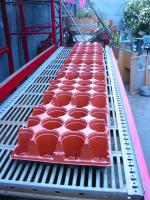
Empty Planting Trays on RackEmpty Planting Trays on Rack


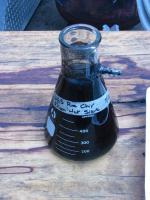
Fine Wet Processed Charcoal Settling in FlaskFine Wet Processed Charcoal Settling in Flask


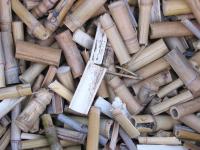
Bamboo FeedstockBamboo Feedstock


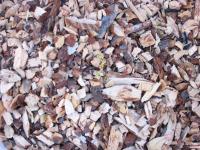
Softwood Chip FeedstockSoftwood Chip Feedstock


Charcoal Production in Woodgas StovesCharcoal Production in Woodgas Stoves

Charcoal GradesCharcoal Grades


Char MeasurementChar Measurement


Amended Pots Prior to MixingAmended Pots Prior to Mixing


Pots Mixed and Seeds SownPots Mixed and Seeds Sown

 First Watering: 8/11/08


Growth After 9 DaysGrowth After 9 Days


Wheat and Peas Seperated to Avoid ShadingWheat and Peas Seperated to Avoid Shading

Some design features below:
Exploring interaction effects of feedstock type, soil, char application
rate, crop species, char size, fertilization, and mycorrhizal fungi.
No repetition (n=1), this loses the ability to assign a statistical
significance level to results, but allows more interactions (96 unique
combinations, 96 pots) to be tried given limited resources.

Charcoal produced in WoodGas stoves.
Char yield 12-18% (char mass/air dry biomass mass) (ie not adjusted to conventional dry weight yield unit, yet).
Fine Char - Blended and sieved to 230 mesh (<63 micron).
Coarse Char - Blended and sieved to between ~24 mesh - 8 mesh.
Fertilizer - 4-4-4 NPK Organic (bone meal, feather meal...)
Potting Soil - Potting Mix
Sandy Soil - Mixture of Horticultural Sand and Sandy Loam from Central Valley

Pots arranged in random spatial order (to randomize light/watering variation). Trays rotated to limit effects of light/watering variation.
Automatic drip emitter watering. Pots grown in enclosed cage outdoors.

Blocks - ( 8 pots/block)
    Fertilizer {Yes,No}
    Plant {Wheat, Pea}
    Soil {Sandy, Potting}

Blocks - (12 blocks * 8 pots/block = 96 pots)
    B1 -    Char (0 g)
    B2 -    Char (1 g, Pine, Fine)
    B3 -    Char (1 g, Pine, Coarse)
    B4 -    Char (1 g, Bamboo, Fine)
    B5 -    Char (1 g, Bamboo, Coarse)
    B6 -    Char (5 g, Pine, Fine)
    B7 -    Char (5 g, Pine, Coarse)
    B8 -    Char (5 g, Bamboo, Fine)
    B9 -    Char (5 g, Bamboo, Coarse)
    B10 -   Char (0 g) + Mycorrhizae
    B11 -   Char (5 g, Pine, Coarse) + Mycorrhizae
    B12 -   Char (10 g, Pine, Coarse)
 

POTENTIAL FOR PYROLYSIS CHAR TO AFFECT SOIL MOISTURE AND AND NUTRIENT STATUS OF A LOAMY SAND SOIL

POTENTIAL FOR PYROLYSIS CHAR TO AFFECT SOIL MOISTURE AND NUTRIENT STATUS OF A LOAMY SAND SOIL
J.W. Gaskin, Adam Speir, L.M. Morris, Lee Ogden, Keith Harris, D. Lee, and K.C Das, Proceedings of the 2007 Georgia Water Resources Conference, held March 27–29, 2007, at the University of Georgia.

Abstract.

Pyrolysis of biomass for hydrogen fuel and bio-oil produces a char byproduct. There is evidence that land application of char may increase soil water holding capacity and the ability of the soil to retain nu-trients. Increases in these soil characteristics could be beneficial to plant growth as well as improving water quality. Chars produced under different conditions and from different feedstocks have different characteristics. Of the common feedstocks tested, peanut hull char con-tained higher nutrients and had a higher cation ex-change capacity than pine chip, pine bark, or hardwood chip chars. Preliminary moisture release curve data from a Tifton loamy sand indicated moisture holding capacity may be increased at very high rates of char addition. Soil moisture was periodically measured dur-ing the growing season in a field study of microplots amended with peanut hull and pine chip pellet char. Although the average soil water content of the plots amended at 22 Mg ha-1 was higher than the control, dif-ferences in volumetric water content were only signifi-cant on one date.

Soil Organic Carbon

Last updated April 15, 2007

Soil Organic Carbon
Jan Skjemstad, CRC Greenhouse Accounting

In Summary

Soil OC is a significant source and sink of atmospheric CO2

Soil is a complex, biologically active medium

Soil OC is not one material

Changes in SOC can be measured directly or can be modelled

The C sink value of soils is limited BUT increasing and maintaining SOC has many benefits for improved productivity and soil resilience

Characterization of Pyrolysis Char for Use as an Agricultural Soil Amendment

Last updated March 08, 2007

Characterization of Pyrolysis Char for Use as an Agricultural Soil Amendment
Keith Harris1, Julia Gaskin1, Leticia Sonon2, and K.C. Das1
1Dept. of Biol. & Ag. Eng., 2AESL, College of Ag & Env. Sci University of Georgia, Athens, GA

Introduction:
The Southeastern Coastal Plain in the United States is a major agricultural production area; however, soils are typically low in cation exchange capacity (CEC), nutrient content, and organic carbon content. For example, Tifton

Soil Chemical Properties Influenced by Water-Washed Charcoal:

Last updated March 07, 2007

Soil Chemical Properties Influenced by Water-Washed Charcoal: Abiotic and Biotic Processes
Chih-Hsin Cheng, Johannes Lehmann and Janice Thies, Department of Crop and Soil Sciences, Cornell University

Introduction
improving soil properties by using charcoal residues, including organic carbon and ashes. High content
of the base ions in the ashes could lead to increase the pH and strongly affect the study results. The

Black Carbon from Rice Residues as Soil Amendment and for Carbon Sequestration

Black Carbon from Rice Residues as Soil Amendment and for Carbon Sequestration
Haefele, SM, Konboon, Y, Knoblauch, C, Koyama, S, Gummert, M, Ladha, JK
Cornell University Poster Presented to International Rice Research Institute, September 14 2006

On highly weathered soils in tropical and subtropical climates, maintenance of soil organic matter is essential to sustain system productivity and avoid rapid soil degradation. But climatic conditions as well as soil characteristics favor the rapid decomposition of organic matter. However, several recent studies indicated that black carbon, the product of incomplete combustion of organic material, could combine characteristics highly beneficial for soil nutrient dynamics with high stability against chemical and microbial breakdown.
Black Carbon Increases Cation Exchange Capacity in Soils

Black Carbon Increases Cation Exchange Capacity in Soils
Liang et al. Soil Sci Soc Am J.2006; 70: 1719-1730

Authors:
B. Liang, J. Lehmann, D. Solomon, J. Kinyangi, J. Grossman, B. O'Neill, J. O. Skjemstad, J. Thies, F. J. Luizão, J. Petersen and E. G. Neves

Abstract:

Black Carbon (BC) may significantly affect nutrient retention and play a key role in a wide range of biogeochemical processes in soils, especially for nutrient cycling. Anthrosols from the Brazilian Amazon (ages between 600 and 8700 yr BP) with high contents of biomass-derived BC had greater potential cation exchange capacity (CEC measured at pH 7) per unit organic C than adjacent soils with low BC contents. Synchrotron-based near edge X-ray absorption fine structure (NEXAFS) spectroscopy coupled with scanning transmission X-ray microscopy (STXM) techniques explained the source of the higher surface charge of BC compared with non-BC by mapping cross-sectional areas of BC particles with diameters of 10 to 50 µm for C forms. The largest cross-sectional areas consisted of highly aromatic or only slightly oxidized organic C most likely originating from the BC itself with a characteristic peak at 286.1 eV, which could not be found in humic substance extracts, bacteria or fungi. Oxidation significantly increased from the core of BC particles to their surfaces as shown by the ratio of carboxyl-C/aromatic-C. Spotted and non-continuous distribution patterns of highly oxidized C functional groups with distinctly different chemical signatures on BC particle surfaces (peak shift at 286.1 eV to a higher energy of 286.7 eV) indicated that non-BC may be adsorbed on the surfaces of BC particles creating highly oxidized surface. As a consequence of both oxidation of the BC particles themselves and adsorption of organic matter to BC surfaces, the charge density (potential CEC per unit surface area) was greater in BC-rich Anthrosols than adjacent soils. Additionally, a high specific surface area was attributable to the presence of BC, which may contribute to the high CEC found in soils that are rich in BC.

Syndicate content