Mycorrhizal fungi

The percentage of the root system that must be colonized has not been fully established in the mycorrhizal literature, mostly because determining benefit is relative. Mycorrhizal fungi can protect the roots from disease organisms, through simple spatial interference, by improving nutrient uptake, and by producing glomulin and other metabolites that inhibit disease. Stress in plants can be reduced because the mycorrhizal fungi can solubilize mineral nutrients from plant not-available forms to plant available forms, and translocate those nutrients to the root system in exchange for sugars provided by the plant. (Soil Foodweb)

Alterna Biocarbon and Cowboy Charcoal Virginia field trials '09

5% Alterna Biochar on Left - 20% on Right.JPG

Field Trials;
 I am field testing for the 09 corn season with JMU and consultation  Dr. Hepperly at Rodale Institute.

Ten research priorities were identified at the IBI conference, The following priorities I hope to address:
• 1- Economy research/market research
• 2- plant+soil research depending on biochar
• 5- field trials
• 8- application to soil (depending on agricultural or other
systems/remediation`)

Planting date: June 24th.
Two split plots , which each are split into a 20% (27 tons/Ac) & 5% (7 tons/Ac) application rates,
All chars soaked in tarps for 1 month, all chars were mixed 1:2 by volume with finished poultry litter compost and roto-tilled to 5 inch depth.

3 treatment groups with 3 replications
Char+ Compost
Char+ Compost + soluble NPK (soaked in char)
MYC+Char+Compost ("Dr. Mike's" Mycorrhiza corn inoculent)
Charcoal #1: Alterna Energy Biocarbon
Charcoal #2: Cowboy Hardwood Lump Charcoal

Soil Testing:
Dr. Mike Amaranthus of Mycorrhiza Applications ( http://www.mycorrhiza.com/ ) has  supplied his granular corn MYC , applied at planting, and lab support for harvest root analysis.
Dr. Kristine Nicoles of ARS, their head glomalin researcher, will also run soil test at Harvest
Lynn Rogers of Microbial Matrix will be testing for functional microbe groups

Total wet weight of corn biomass will be collected for each treatment group.

Much Thanks to:

 James Madison University / I.S.A.T., Dr. Wayne Teal - for providing a student for work and help in publication.

Local farmers Keith Sheetz and Andy & Jack Dixon

Dr. Paul Hepperly of Rodale Institude in PA. for consultations and his sister study in cow-peas.

Special thanks to Ecotechnologies Group for funding both of our studies.  http://www.ecotechnologies.com/index.html

The soil carbon bond can lead to an integration of organic and commercial agriculture practices. Biochar is a tool for both, for organic to increase its already-sustainable credentials, for chemical agriculture to at least halt soil carbon mining and seriously reduce nutrient runoff. The carbon sequestration bond can lead to a marriage of the best practices from both systems of agriculture to build soil into a biologically vital synergistic organism.

I hope to demonstrate this in my field trials with Roundup-ready corn, with the consultation of the Rodale Institute. Soil test for the full spectrum of food web organisms should ferret out the affinity of BioChar with these organisms in the context of standard chemical agricultural practices, and at Rodale with organic practice.

Erich J. Knight
Eco Technologies Group Technical Adviser
University of California Riverside advisory board member
Shenandoah Gardens (Owner)
1047 Dave Barry Rd.
McGaheysville, VA. 22840
540 289 9750


Soil Secrets: Humic Acids

Last updated December 26, 2008

Soil Secrets: Humic Acids
Dr. Melendez, Soil Secrets, Courtesy Daved Yarrow December 2008

How Humic Acid is Created

Humus is the common name used by most of us and it’s a term that lumps the stable molecular acids called Humic acids together with the not fully decomposed soil organic residue that is broken down into parts too small to identify it’s origins. Together this conglomerate of Humic acids which are bio-chemicals and the polymorphic Soil Organic Matter define the presence and sustainability of a top soil. Soil Organic Matter has a calorie value and will rapidly decompose or cycle into Carbon dioxide while the Humic acids are not rapid cycling, have no calorie value and therefore will have a chemical half life measured in many decades if not centuries. The term ‘Humic substances’ is often used interchangeably with Humic acids which addresses the most essential and long lasting carbon bank of substances that has a true bio-chemical benefit to a Soil’s Terrestrial Biosphere. In nature the riches sources of these substances are found in a rich top soil, peat, lignite coal, and Leonardite and the Humate formations of NW New Mexico.

Leonardite, is a highly oxidized form of organic matter, and is technically a low rank coal between peat and sub-bituminous. It was formed during a time of ancient salt water inland seas while Humate was formed when that North Western region of New Mexico was thick in huge tropical carboniferous forests and fresh water inland swamps.

Humic acids have a definable molecular structure of which a fragment is illustrated below.
The Humic acids of soil are a product of soil chemistry of which the precursor to humus formation is protein. The Humic acids are not organic matter in the true since as they have a definable molecular structure and are no longer decomposing organic biomass such as rotting roots or compost. It can be said that the Humic acids are essential for a healthy and productive soil.
Part of the chemical structure of the Humic acids has been oxidized away providing broken bonds which create places on the molecules where micronutrient ions can be absorbed. The oxidized sites give the entire molecule a negative charge enabling it to absorb micronutrients. The organic structure of Humic acid is naturally oxidized, as shown by the asterisks, giving it a negative charge.
Positive ions, attracted to broken bonds at the site of the oxidation, create sites for micronutrients and micro-flora to attach.

How Humus (Humic Acids) Work

Clay Disaggregation: Clay particles normally lay together flat as shown, but having a negative charge will repelled each other. When Salt (Na+) is present in minor amounts, the clay platelets will collapse.

Soils clay content can become so dense and compact that they may resist plant rooting because they lack good porosity with aerobic conditions needed by plant roots. This may happen for one of two reasons:

First, the salt in the soil has neutralized the negative electrical charges which normally cause clay particles to repel each other.
Salt overload causes clay platelets to attract each other.
When an excessive amount of salt is present, it neutralizes the negative electrical charges that normally cause clay particles to repel each other. The platelets move closer together. This is called soil collapse, a condition seen in irrigated regions world wide, where soil salinity is a growing problem.

Clay compaction

The percentage of clay in the soil can be so high that the positive charge on the edge of a clay particle combines with the negative charge on the flat surface of another, forming a tight three-dimensional structure as shown in in this image.
When the percentage of clay in the soil is very high, and especially when an excessive amount of salt is present, the positive charge on the edge of a clay particle combines with the negative charge on the flat surface of another, forming a tight three dimensional structure.
Water Penetration is Enabled with the help of Humic acids (Humus)
Humic acid causes the clay particles to stand on end, allowing water penetration. It does this in two ways.

1. First, it segregates salts (positive ions) and removes them from the surface of the clay particle. This restores a negative charge to the clay platelets causing the clay platelets to repel each other, therefore loosening the soil structure.

2. Second, a carbon group on the Humic acid molecule (carboxyl group) bonds with the edge of the positively charged particles. This breaks the attractive force between the positive charge at the edge of a particle and the negative charge or the flat surface of another.

This action, called protective colloidal action, loosens soil, letting roots penetrate more easily.
Micronutrient exchange is improved with Humus (Humic acids) in the soil.
Humic acid is extremely important as a medium for transporting nutrients from the soil to the plant.
Humic acid picks up positive ions. Since the root's negative charge is greater than Humic acid's negative charge, scientists theorize that the micronutrients are taken up by a plant's root and absorbed by the plant's circulation system.

Since the root system is negatively charged, when the Humic acid moves close to the root, the root's negative charge exceeds the acid's negative charge. The micronutrients are released from the Humic acid molecule and enter the root membrane.

Water Sequestration

Positive ions are more easily absorbed by a plant's root.

Humic acid holds cations in a way they can be more easily absorbed by a plant's root, improving micronutrient transference to the plant's circulation system.

Humic acid slows water evaporation from soils. This is especially important in soils where clay is not present or in a low concentration, in arid areas, and in sandy soils without the capability to hold water.

In the presence of water, cations absorbed by Humic acid partially ionize and move a short distance away from the Humic acid oxidation sites. This restores part of the bonded ion's positive attractive force. Since water is a dipolar molecule and electrically neutral, the end of the molecule containing the oxygen atom loosely bonds to the ion. The hydrogen or negative end of the water molecule is partially neutralized, and as a result, increases the hydrogen end's positive attracting force. The oxygen (or negative) end of another water molecule bonds with the hydrogen end and this continues until the attractive force of the water molecule is dissipated. This is called surface tension!

Humic acids can save up to 30% on water

The polar nature of water molecules allows them to bond to each other in groups and is associated with the high surface tension of water. The polar nature of the water molecule has many implications. It causes water vapor at sufficient vapor pressure to depart from the ideal gas law because of dipole-dipole attractions. This can lead to condensation and phenomena like cloud formation, fog, the dew point, etc. It also has a great deal to do with the function of water as the solvent of life in biological systems.

This effect reduces the evaporation rate by about 30%. Humic acid can significantly reduce water evaporation and increase its use by plants in non-clay, arid, and sandy soils.

Note:
i have a large .pdf file with powerpoint slides of useful information about humus, humic acids & the soil food web by dr. michael melendrez of www.soilsecrets.com. very useful information to better understand how biochar affects soil structure and character.

the file is 3.4mb -- to large to send through yahoogroups. i will email the file to anyone interested.

pasted below is the text from 9 of the 25 slides.

unfortunately, dr. melendrez doesn't know much about biochar and its effects in soils, and has formed a negative preliminary judgment about biochar -- seeing it as competitive and redundant to the humic acids he knows and loves. i respect his work, since he has perfected humus-building methods and materials that work very well in the alkaline and saline soils of the american southwest.

dr. melendrez first used the descriptor "soil food web" in a research paper he prepared in 1976 -- long before dr. elaine ingham in oregon coined the phrase to describe her own theories and insights.

for a green & peaceful planet,
David Yarrow
Turtle EyeLand Sanctuary
44 Gilligan Rd, East Greenbush, NY 12061
cell: 518-881-6632
www.championtrees.org
www.OnondagaLakePeaceFestival.org
http://tech.groups.yahoo.com/group/carbon-negative
www.farmandfood.org
www.SeaAgri.com

Biochar Trial 2 - Design [Draft]

Biochar Trial Photos
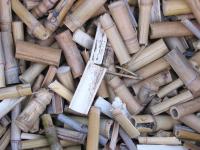
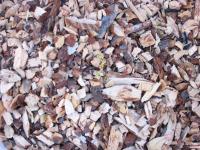
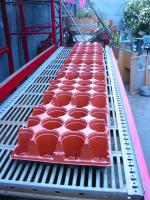
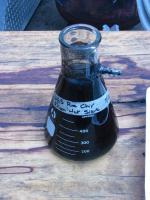
Empty Planting Trays on Rack Fine Wet Processed Charcoal Settling in Flask Bamboo Feedstock Softwood Chip Feedstock
Charcoal Production in Woodgas Stoves Charcoal Grades Char Measurement  
Amended Pots Prior to Mixing Pots Mixed and Seeds Sown Growth After 9 Days Wheat and Peas Seperated to Avoid Shading

Some design features below:
Exploring interaction effects of feedstock type, soil, char application
rate, crop species, char size, fertilization, and mycorrhizal fungi.
No repetition (n=1), this loses the ability to assign a statistical
significance level to results, but allows more interactions (96 unique
combinations, 96 pots) to be tried given limited resources.

Charcoal produced in WoodGas stoves.
Char yield 12-18% (char mass/air dry biomass mass) (ie not adjusted to conventional dry weight yield unit, yet).
Fine Char - Blended and sieved to 230 mesh (<63 micron).
Coarse Char - Blended and sieved to between ~24 mesh - 8 mesh.
Fertilizer - 4-4-4 NPK Organic (bone meal, feather meal...)
Potting Soil - Potting Mix
Sandy Soil - Mixture of Horticultural Sand and Sandy Loam from Central Valley

Pots arranged in random spatial order (to randomize light/watering variation). Trays rotated to limit effects of light/watering variation.
Automatic drip emitter watering. Pots grown in enclosed cage outdoors.

Blocks - ( 8 pots/block)
    Fertilizer {Yes,No}
    Plant {Wheat, Pea}
    Soil {Sandy, Potting}

Blocks - (12 blocks * 8 pots/block = 96 pots)
    B1 -    Char (0 g)
    B2 -    Char (1 g, Pine, Fine)
    B3 -    Char (1 g, Pine, Coarse)
    B4 -    Char (1 g, Bamboo, Fine)
    B5 -    Char (1 g, Bamboo, Coarse)
    B6 -    Char (5 g, Pine, Fine)
    B7 -    Char (5 g, Pine, Coarse)
    B8 -    Char (5 g, Bamboo, Fine)
    B9 -    Char (5 g, Bamboo, Coarse)
    B10 -   Char (0 g) + Mycorrhizae
    B11 -   Char (5 g, Pine, Coarse) + Mycorrhizae
    B12 -   Char (10 g, Pine, Coarse)
 

POTENTIAL FOR PYROLYSIS CHAR TO AFFECT SOIL MOISTURE AND AND NUTRIENT STATUS OF A LOAMY SAND SOIL

POTENTIAL FOR PYROLYSIS CHAR TO AFFECT SOIL MOISTURE AND NUTRIENT STATUS OF A LOAMY SAND SOIL
J.W. Gaskin, Adam Speir, L.M. Morris, Lee Ogden, Keith Harris, D. Lee, and K.C Das, Proceedings of the 2007 Georgia Water Resources Conference, held March 27–29, 2007, at the University of Georgia.

Abstract.

Pyrolysis of biomass for hydrogen fuel and bio-oil produces a char byproduct. There is evidence that land application of char may increase soil water holding capacity and the ability of the soil to retain nu-trients. Increases in these soil characteristics could be beneficial to plant growth as well as improving water quality. Chars produced under different conditions and from different feedstocks have different characteristics. Of the common feedstocks tested, peanut hull char con-tained higher nutrients and had a higher cation ex-change capacity than pine chip, pine bark, or hardwood chip chars. Preliminary moisture release curve data from a Tifton loamy sand indicated moisture holding capacity may be increased at very high rates of char addition. Soil moisture was periodically measured dur-ing the growing season in a field study of microplots amended with peanut hull and pine chip pellet char. Although the average soil water content of the plots amended at 22 Mg ha-1 was higher than the control, dif-ferences in volumetric water content were only signifi-cant on one date.

Azotobacter Question and Answer June 2007

Last updated June 12, 2007

Azotobacter Question and Answer June 2007
Richard Haard, Four Courner Nursery, Bellingham, Washington, June 11, 2007

Question by Sean Barry:
RH ". . .Learning about potential for enrichment culture of Azotobacter and trying to measure available nitrogen in this situation."

Here you mention promoting the growth of nitrogen fixing Azotobacter. I have always been interested in the possibility of inoculating charcoal with mycorrhizal fungi.

FNCA Biofertilizer Newsletter and Mycorrhiza

Last updated February 04, 2008

FNCA Biofertilizer Newsletter
Mr. Richard M. Balog, Editor, Leader of FNCA Biofertilizer Project of the Philippines, Issue No. 7 February 2007

Message from the Philippines.

Dear Readers,

This 7th issue of the FNCA (Forum for Nuclear Cooperation in Asia) Biofertilizer Newsletter features the activities pertaining to research and development, industry, use and promotion and impactof Biofertilizers in Philippine agriculture. It's my pleasure to share to you information herein that you may find interesting and valuable in line with the same activities in your respective areas.
The need to address the food requirement of the growing population in the Philippines made the farmers adopt the latest technology in agriculture like the use of high yielding and resistant crop varieties. These varieties however require high amount of nutrients making the farmers dependent on agricultural input like inorganic fertilizers. It was reported that from 1966 to 1998 fertilizer application in the Philippines increased from 20% to 80%. Nitrogen, considered as the most limiting
factor in crop production, gains the highest mark of all the major nutrients from inorganic sources applied by farmers. The 2001 FAO (Food and Agriculture Organization) Yearbook on fertilizers stated that from 1987 to 1998, Philippine consumption of nitrogenous fertilizers increased from 371,487 MT to 546,499 MT. Such consumption resulted to high production for some time but adverse soil and other environmental conditions were observed in the long run. This called for the use of other alternative inputs. The use of biofertilizers has been determined as one of the main options to address the rising concern on agricultural and environmental sustainability.

Biofertilizer industry in the Philippines grown considerably with the promotion of Government of bioorganic farming and the active involvement of research institutions, private individuals and enterprises. Biofertilizers in various forms have been developed and more researches on rhizobia legume symbiosis, azolla, mychorriza, sesbania, blue green algae and the living microorganism (Nfixing bacteria) were encouraged.

My sincere thanks to the contributors who graciously contributed some highlights of their research works and efforts. Without their contributions, this issue would not have materialized.

Best regards,
Richard M. Balog
FNCA Biofertilizer Project Leader, Philippines

See also:
3. Mycorrhiza

FNCA: Mycorrhiza

Last updated April 11, 2007

Mycorrhiza
FNCA Biofertilizer Project Chapter 4 03

Mycorrhizal fungi are species of fungi that intimately
associate with plant roots forming a symbiotic relationship, with the
plant providing sugars for the fungi and the fungi providing nutrients
such as phosphorus, to the plants. Mycorrhizal fungi can absorb,
accumulate and transport large quantities of phosphate within their
hyphae and release to plant cells in root tissue.

See Description

Heike Bucking - Mycorrhizal Research

Last updated April 11, 2007

Heike Bucking - Mycorrhizal research
Heike Bucking. Rutgers University, New Jersey

Mycorrhiza Literature Exchange

Last updated April 09, 2007
Syndicate content