Effects of Varied Soil Composition (Char, Sand, Potting Mix) on the Growth of Radish Starts

Last updated August 30, 2008

Bear Kaufmann. Initially posted April 7, 2008. Updated August 5, 2008.
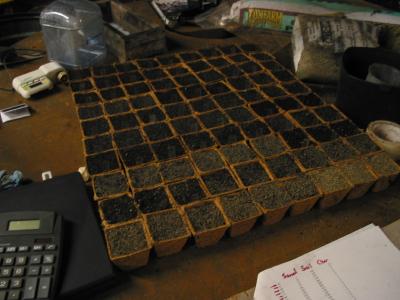
 

IMG_0872


IMG_0878


IMG_0884


IMG_0930


IMG_0934


IMG_0935

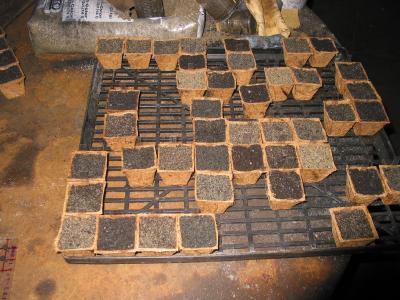
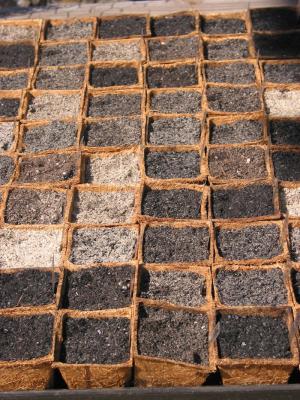
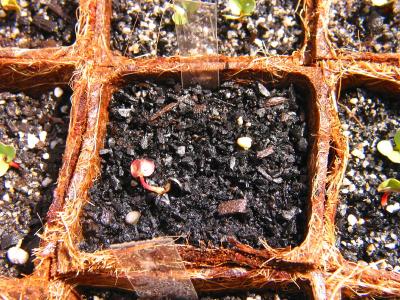
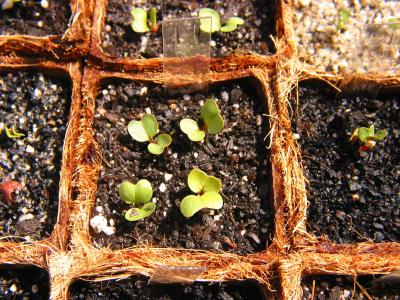
Images showing trial preparation and radish germination
(Select image to enlarge in Gallery.)

Materials/Methods

Char was Lazzari Brand mesquite BBQ char (due to availability), crushed and screened to 1/8".
No nutrients were added to the char itself or to the soil.
Soil was FoxFarm OceanForest Potting Soil.
Sand used was horticultural sand.
No mycorrhizal fungi were added.
Mixtures range from 0-100% sand, soil, and char in ~16% increments by volume. 90 pots total. 28 combinations with 3 pots each + 6 additional pots at 33%/33%/33% composition. Pots were placed randomly within the tray. Tray was rotated 180° occasionally.
Plants were watered daily by a drip irrigation system.
Plants were removed from pots ~1 month after first watering. Soil was rinsed from roots and roots were patted dry with a towel. Wet weight of roots+shoots was measured (Acculab VI-3mg, 0.001 g precision).

Box Plots Showing Effect of Composition Across Three Transects
Figure 1. Box Plots Showing Effect of Composition Across Three Transects

Figure 2. Pictures of Radishes at Important Compositions

Results

Plant growth was stunted even for the best preforming plants, likely due to the small pot size. Leaf color varied across different compositions.
A mixture of 33% charcoal and 67% soil had the best growth (176% of pure soil). Aside from mixtures around this level (Figure 1b), high levels of charcoal showed a generally negative effect on plant growth (Figure 1c).

Discussion

The positive interaction effects of charcoal and soil (Figure 1a,1b) are interesting. Assuming charcoal itself provides no integral nutrients to the soil (eg. nitrogen), increasing amounts of charcoal reduce nutrients available from the soil mixture. The effects at 33% char/67% soil, however, show beneficial effects. This could be explained by increased mineralization rates caused by the charcoal causing soil nutrients to be more available to plants. Beyond 33%, the Cation Exchange Capacity of the charcoal may have held the nutrients produced by mineralization, making them less plant available. Since the charcoal was not amended/soaked in a nutrient bearing solution it likely had a low Base Saturation leading to adsorption of nutrients as they became available. Other potential explanations for increased growth along the soil/char transect include alterations to pH or limiting nutrients (eg potassium(?)) provided by the charcoal. The speculative mineralization/CECi model could also explain the effects seen along the sand/char transect. Here, since the sand lacks organic materials and bound nutrients for soil microorganisms to make plant available, the increasing unsaturated CEC may have made any nutrients less plant available.

Author: Bear Kaufmann bear@ursine-design.com