Sustainable agriculture

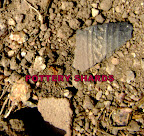
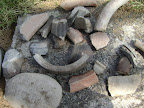
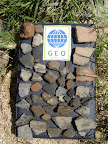
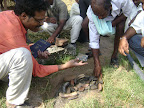
POTTERY SHARDS IN SOIL - INDIA

Last updated January 30, 2009

Regarding impact of Pottery shards in the soil there were several questions. I had been searching for pottery shards in the agricultural fields and most often and I got to see some pottery shards in the field. Where ever agriculture was the main livelihood, high densities of populations existence, civilization at the helm and space was a constraint, innovations were adopted by humans, and such practices are sustainable even now.
For more photographs and relevant links see
http://e-potteryshardssoil.blogspot.com/

The charcoal and pottery shards are the two most common by-products of human habitats. At least some charcoal / biochar along with ash was contributed by the people living in habitations in the past (see table in the above link). The availability of the quantity of such by-product, ingenious use, management and development are the aspects still to be discovered. If charcoal / pottery shards did not occur in certain areas in spite of human settlements existence, than there must be some reason yet to be discovered. But both charcoal and pottery existence as a result of human activities was beyond history, so there is no reason why these things are not seen.

The fired pottery made up of clay is most popular. Still the poor people in rural villages in parts of India cook in the clay pots. The pots used for drinking water collection is most common, even today millions of pots are produced and used all over India every year, the usage would be more especially during summers. The evaporation of the water from the fine pores of the pot cool the water inside the pot. The temperature would be at least 5 deg centigrade less than the surrounding air temp. The cooling effects would be very high under less relative humidity conditions. The roofs made up of clay tiles also provide cool shelter, and very much useful in the tropics where temperatures are very high during summers. For majority of the main festivals pots or pottery items are used. From Birth to death, for all important occasions pottery items are used.

Effects of Varied Soil Composition (Char, Sand, Potting Mix) on the Growth of Radish Starts

Last updated March 10, 2009

Bear Kaufmann. Initially posted April 7, 2008. Updated August 5, 2008.


Images showing trial preparation and radish germination
(Select image to enlarge in Gallery.)

Materials/Methods

Char was Lazzari Brand mesquite BBQ char (due to availability), crushed and screened to 1/8".
No nutrients were added to the char itself or to the soil.
Soil was FoxFarm OceanForest Potting Soil.
Sand used was horticultural sand.
No mycorrhizal fungi were added.
Mixtures range from 0-100% sand, soil, and char in ~16% increments by volume. 90 pots total. 28 combinations with 3 pots each + 6 additional pots at 33%/33%/33% composition. Pots were placed randomly within the tray. Tray was rotated 180° occasionally.
Plants were watered daily by a drip irrigation system.
Plants were removed from pots ~1 month after first watering. Soil was rinsed from roots and roots were patted dry with a towel. Wet weight of roots+shoots was measured (Acculab VI-3mg, 0.001 g precision).

Box Plots Showing Effect of Composition Across Three Transects
Figure 1. Box Plots Showing Effect of Composition Across Three Transects

Figure 2. Pictures of Radishes at Important Compositions

Results

Plant growth was stunted even for the best preforming plants, likely due to the small pot size. Leaf color varied across different compositions.
A mixture of 33% charcoal and 67% soil had the best growth (176% of pure soil). Aside from mixtures around this level (Figure 1b), high levels of charcoal showed a generally negative effect on plant growth (Figure 1c).

Discussion

The positive interaction effects of charcoal and soil (Figure 1a,1b) are interesting. Assuming charcoal itself provides no integral nutrients to the soil (eg. nitrogen), increasing amounts of charcoal reduce nutrients available from the soil mixture. The effects at 33% char/67% soil, however, show beneficial effects. This could be explained by increased mineralization rates caused by the charcoal causing soil nutrients to be more available to plants. Beyond 33%, the Cation Exchange Capacity of the charcoal may have held the nutrients produced by mineralization, making them less plant available. Since the charcoal was not amended/soaked in a nutrient bearing solution it likely had a low Base Saturation leading to adsorption of nutrients as they became available. Other potential explanations for increased growth along the soil/char transect include alterations to pH or limiting nutrients (eg potassium(?)) provided by the charcoal. The speculative mineralization/CECi model could also explain the effects seen along the sand/char transect. Here, since the sand lacks organic materials and bound nutrients for soil microorganisms to make plant available, the increasing unsaturated CEC may have made any nutrients less plant available.

Author: Bear Kaufmann bear at ursine-design.com

Comment to bioenergy with carbon storage (BECS)

Last updated November 23, 2007

Comment to bioenergy with carbon storage (BECS)
Christoph Steiner, to the Terra Preta Discussion List, November 8, 2007


Carbon-negative bioenergy to cut global warming could drive deforestation:
An interview on BECS with Biopact’s Laurens Rademakers Mongabay.com (November 6, 2007) http://news.mongabay.com/2007/1106-carbon-negative_becs.html


The article on mongabay.com deals about a proposed mechanism for generating carbon-negative bioenergy. Bioenergy with carbon storage (BECS) holds out the prospect of reducing CO2 from the atmosphere while producing carbon-negative energy. The article provides an informative introduction on how “carbon-negativity” is feasible and assumes geosequestration (developed from the “clean coal” industry,
CO2 capture in depleted oil and gas fields, saline aquifers etc.) as the sequestering tool. Laurens Rademakers delineates the risks such as deforestation of tropical rainforests and leakage of geosequestration. In addition these technologies require vast capital inputs and large scale projects.


A substantive difference of bio-energy to fossil-energy allows Charcoal Carbon Capture!
Geosequestration and carbon capture technologies are currently being developed by the coal industry in order to produce the so-called “clean coal”. Using this technology, the coal industry can at best reduce its CO2 emissions, while using re-growing biomass would establish a carbon sink. This substantive difference allows bio-energy (energy from re-growing biomass) production systems to apply yet another way to capture carbon – Charcoal Carbon Sequestration! Bio-energy with charcoal carbon sequestration (BECCS) would only capture a maximum of 50% of the carbon stored in the biomass but offers the following
advantages:


1)Decentralized and small scale projects are feasible


2)Large capital investments are not necessary. The technologies range from small cooking stoves to large bioenergy production units. No carbon capture technology is necessary as charcoal is a byproduct of gasification. As price for the incomplete gasification a proportion of the energy (geosequestration demands energy too) is invested to capture carbon in charcoal


3) Biochar (Charcoal used as soil amendment) increases soil fertility and sustainability (important for continuous cropping for energy or food
crops)


4) No risk of harmful CO2 leakage as in systems like geosequestration.
Most scientists agree that the half life of charcoal is in the range of centuries or millennia.


5) Only re-growing resources can establish a carbon sink. Tropical Rainforest is not considered as re-growing resource in a BECCS scenario.


An access to the C trade market holds out the prospect to reduce deforestation of primary forest, because using intact primary forest would reduce the C credits. The estimated above-ground biomass of unlogged forests is around 400 Mg ha 1, about half of which is C. This C is lost at a high percentage if used for gasification and only < 50% is captured by BECCS. The C trade could provide an incentive to cease further deforestation; instead reforestation and recuperation of degraded land for fuel and food crops would gain magnitude.

Fourth USDA Greenhouse Gas Conference: Positioning Agriculture and Forestry to Meet the Challenges of Climate Change

Last updated June 06, 2007

Fourth USDA Greenhouse Gas Conference: Positioning Agriculture and Forestry to Meet the Challenges of Climate Change
February 6 - 8, 2007 - Baltimore Marriott Camden Yards, Baltimore, Maryland

Conference Program

13: Soil Carbon: Part I - Interactive Discussion

Syndicate content