Wood

Biochar Trial 2 - Design [Draft]

Empty Planting Trays on RackEmpty Planting Trays on Rack


Fine Wet Processed Charcoal Settling in FlaskFine Wet Processed Charcoal Settling in Flask


Bamboo FeedstockBamboo Feedstock


Softwood Chip FeedstockSoftwood Chip Feedstock


Charcoal Production in Woodgas StovesCharcoal Production in Woodgas Stoves

Charcoal GradesCharcoal Grades


Char MeasurementChar Measurement


Amended Pots Prior to MixingAmended Pots Prior to Mixing


Pots Mixed and Seeds SownPots Mixed and Seeds Sown

 First Watering: 8/11/08


Growth After 9 DaysGrowth After 9 Days


Wheat and Peas Seperated to Avoid ShadingWheat and Peas Seperated to Avoid Shading

Some design features below:
Exploring interaction effects of feedstock type, soil, char application
rate, crop species, char size, fertilization, and mycorrhizal fungi.
No repetition (n=1), this loses the ability to assign a statistical
significance level to results, but allows more interactions (96 unique
combinations, 96 pots) to be tried given limited resources.

Charcoal produced in WoodGas stoves.
Char yield 12-18% (char mass/air dry biomass mass) (ie not adjusted to conventional dry weight yield unit, yet).
Fine Char - Blended and sieved to 230 mesh (<63 micron).
Coarse Char - Blended and sieved to between ~24 mesh - 8 mesh.
Fertilizer - 4-4-4 NPK Organic (bone meal, feather meal...)
Potting Soil - Potting Mix
Sandy Soil - Mixture of Horticultural Sand and Sandy Loam from Central Valley

Pots arranged in random spatial order (to randomize light/watering variation). Trays rotated to limit effects of light/watering variation.
Automatic drip emitter watering. Pots grown in enclosed cage outdoors.

Blocks - ( 8 pots/block)
    Fertilizer {Yes,No}
    Plant {Wheat, Pea}
    Soil {Sandy, Potting}

Blocks - (12 blocks * 8 pots/block = 96 pots)
    B1 -    Char (0 g)
    B2 -    Char (1 g, Pine, Fine)
    B3 -    Char (1 g, Pine, Coarse)
    B4 -    Char (1 g, Bamboo, Fine)
    B5 -    Char (1 g, Bamboo, Coarse)
    B6 -    Char (5 g, Pine, Fine)
    B7 -    Char (5 g, Pine, Coarse)
    B8 -    Char (5 g, Bamboo, Fine)
    B9 -    Char (5 g, Bamboo, Coarse)
    B10 -   Char (0 g) + Mycorrhizae
    B11 -   Char (5 g, Pine, Coarse) + Mycorrhizae
    B12 -   Char (10 g, Pine, Coarse)
 

Potato & Terra Preta - 2007

Last updated December 29, 2007

PotatoPotato
This is Puffergas' first test of growing potatoes in switchgrass compost. The potatoes were grown in containers and charcoal was added to the compost.
See link below:
Potato 2007 by Puffergas

POTENTIAL FOR PYROLYSIS CHAR TO AFFECT SOIL MOISTURE AND AND NUTRIENT STATUS OF A LOAMY SAND SOIL

POTENTIAL FOR PYROLYSIS CHAR TO AFFECT SOIL MOISTURE AND NUTRIENT STATUS OF A LOAMY SAND SOIL
J.W. Gaskin, Adam Speir, L.M. Morris, Lee Ogden, Keith Harris, D. Lee, and K.C Das, Proceedings of the 2007 Georgia Water Resources Conference, held March 27–29, 2007, at the University of Georgia.

Abstract.

Pyrolysis of biomass for hydrogen fuel and bio-oil produces a char byproduct. There is evidence that land application of char may increase soil water holding capacity and the ability of the soil to retain nu-trients. Increases in these soil characteristics could be beneficial to plant growth as well as improving water quality. Chars produced under different conditions and from different feedstocks have different characteristics. Of the common feedstocks tested, peanut hull char con-tained higher nutrients and had a higher cation ex-change capacity than pine chip, pine bark, or hardwood chip chars. Preliminary moisture release curve data from a Tifton loamy sand indicated moisture holding capacity may be increased at very high rates of char addition. Soil moisture was periodically measured dur-ing the growing season in a field study of microplots amended with peanut hull and pine chip pellet char. Although the average soil water content of the plots amended at 22 Mg ha-1 was higher than the control, dif-ferences in volumetric water content were only signifi-cant on one date.

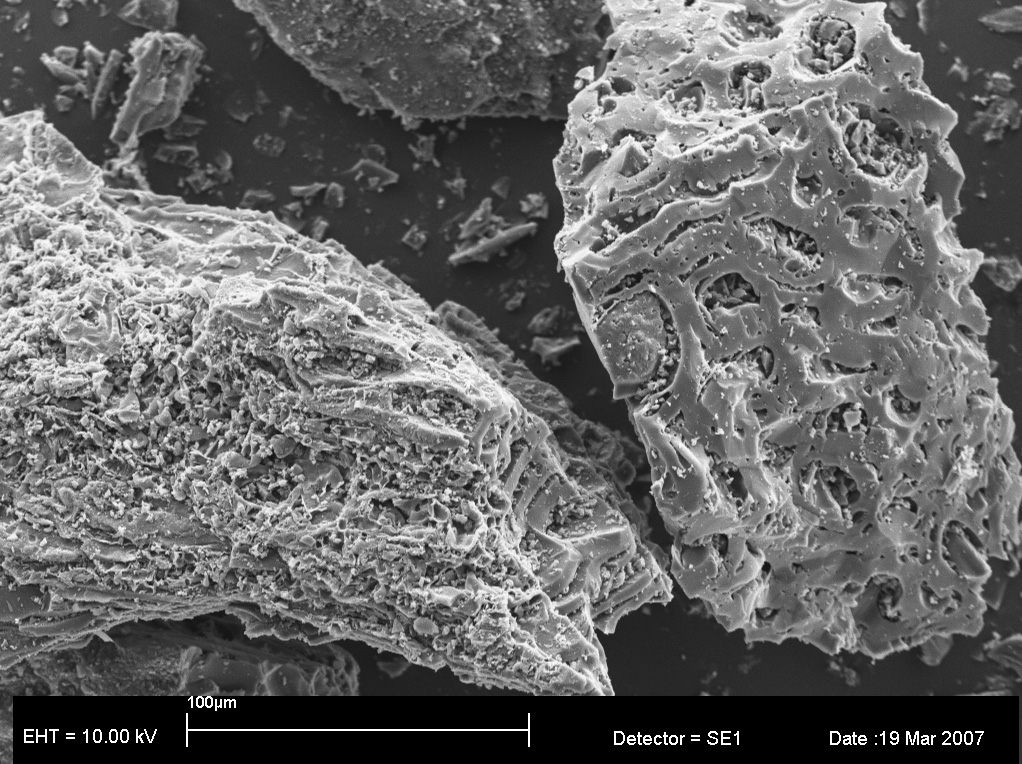
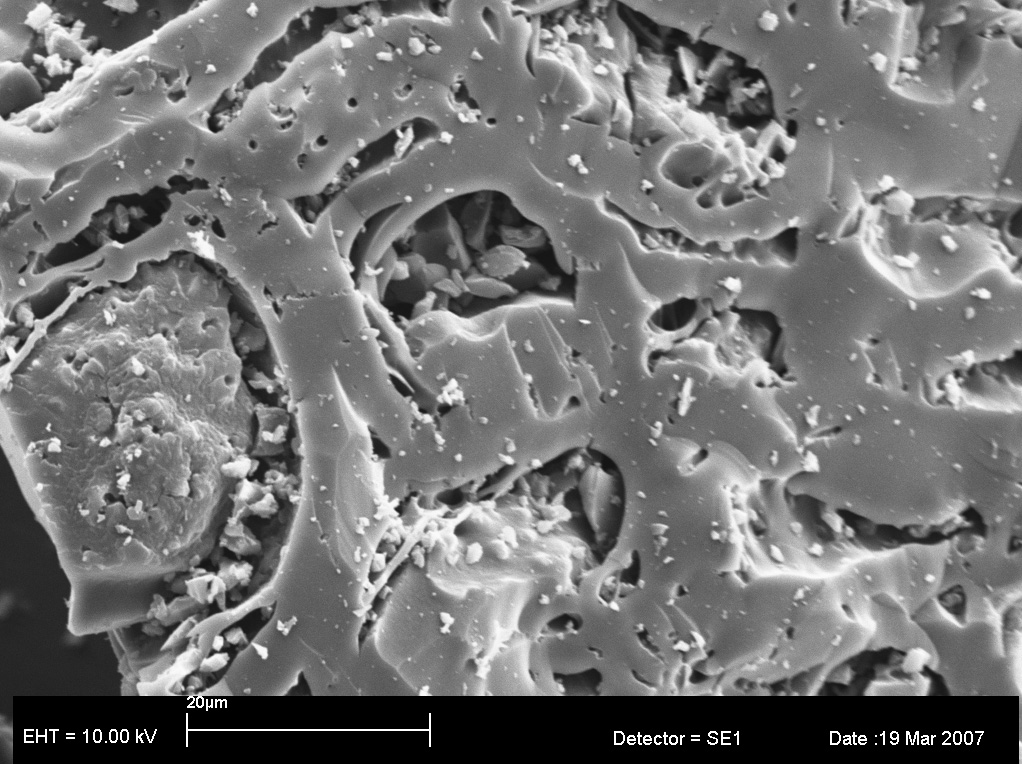
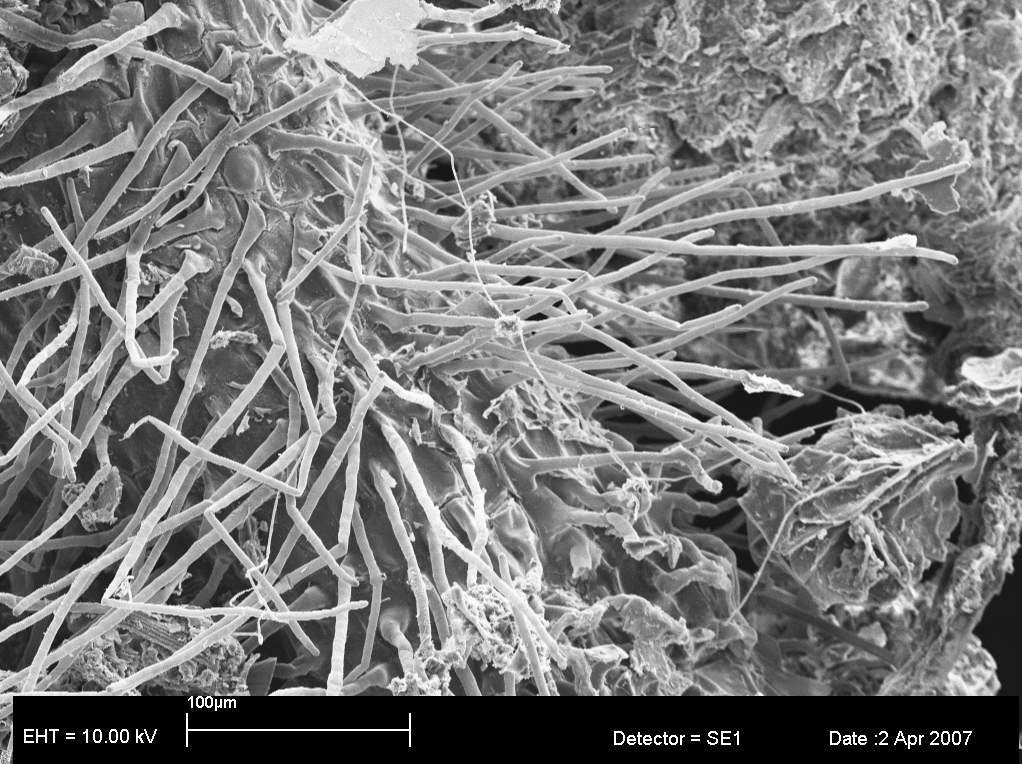
Images of Pyrolysed Biocarbons (PBCs) and Dielectric relaxation of water adsorbed on wood and charcoal

Images of Pyrolysed Biocarbons (PBCs) and Dielectric relaxation of water adsorbed on wood and charcoal
Alfred Harris to Stephen Joseph, BEST Energies, May 8, 2007

Select image to enlarge


Indonesia: Survey on the Effect of Charcoal to Tree Growth and Charcoal Production in West Kalimantan

Last updated March 06, 2007

Indonesia: Survey on the Effect of Charcoal to Tree Growth and Charcoal Production in West Kalimantan (1.3 mb pdf)
Carbon Fixing Forest Management project
Demonstration Study on Carbon Fixing Forest Management in Indonesia
Cooperation Project between Forestry Research and Development Agency (FORDA), Ministry of Forestry, Indonesia, Japan International Cooperation Agency (JICA)
Collaboration with Yayasan Dian Tama December 2005
FOREWORD

Wikipedia - Charcoal

Last updated April 23, 2007

Potential of carbon sequestration by carbonizing wood residue from industrial tree plantation as a Clean Development Mechanism p

Last updated April 13, 2007

Potential of carbon sequestration by carbonizing wood residue from industrial tree plantation as a Clean Development Mechanism project in the Kyoto Mechanism
Okimori,Y.Takahashi,F. Ogawa,M. (KANSO),Yamanaka,T.(Kansai Electric Power), Energy with Agricultural Carbon Utilization Symposium, Georgia 2004

1. Effective sequestration of CO2 in atmosphere and its inactivation
2. Carbon sequestration project by forestation and charcoal use
3. Charcoal properties
4. Charcoal properties: porous structure

Syndicate content